Oracle IAS partners with UPES for conducting Civil Services Exam training

Oracle IAS has signed a Memorandum of Understanding with the University of Petroleum and Energy Sciences(UPES) for providing Civil Services Exam training to the students of the School of Public Policy. According to the agreement, Oracle IAS shall be exclusive official partner of UPES and take classes for UPSC Civil Services Exam for all years

Oracle IAS partners with UPES for conducting Civil Services Exam training Read More »
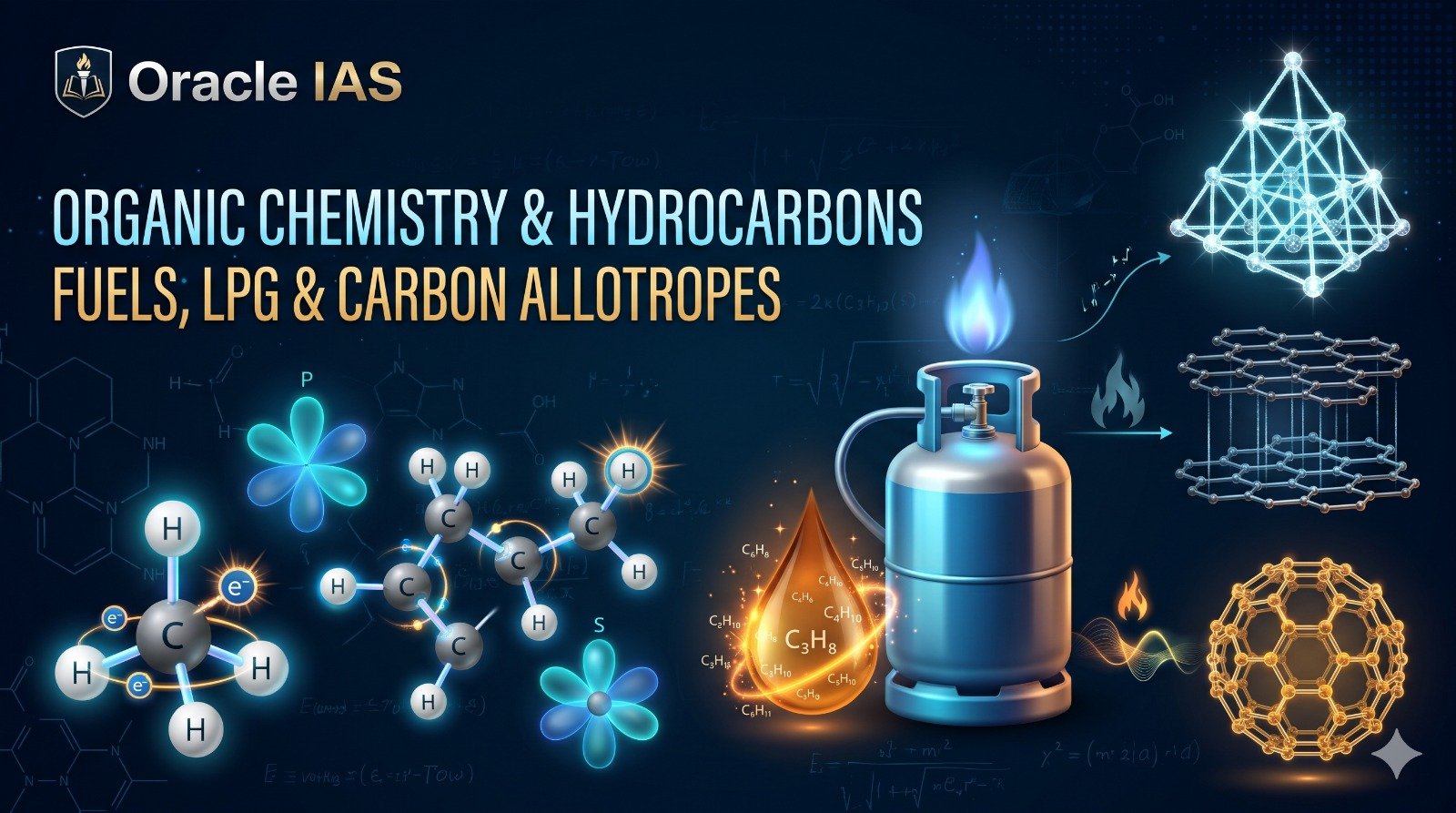
Organic Chemistry, Hydrocarbons, Fuels, LPG & Carbon Allotropes

UKPSC Chemistry: Organic Chemistry, Hydrocarbons, Fuels, LPG & Carbon Allotropes (Solved PYQs & Notes)

UKPSC Chemistry Unit 3: Organic Chemistry, Hydrocarbons, Fuels, LPG & Carbon Allotropes Part of the UKPSC General Science & Technology Revision Series. 1.High-Yield Micro-Notes Hydrocarbons & Gaseous Fuels: Methane (CH₄) is the primary constituent of natural gas, Compressed Natural Gas (CNG ≈ 85–95%), and biogas/gobar gas (55–65%). Known historically as marsh gas, it is produced

UKPSC Chemistry: Organic Chemistry, Hydrocarbons, Fuels, LPG & Carbon Allotropes (Solved PYQs & Notes) Read More »

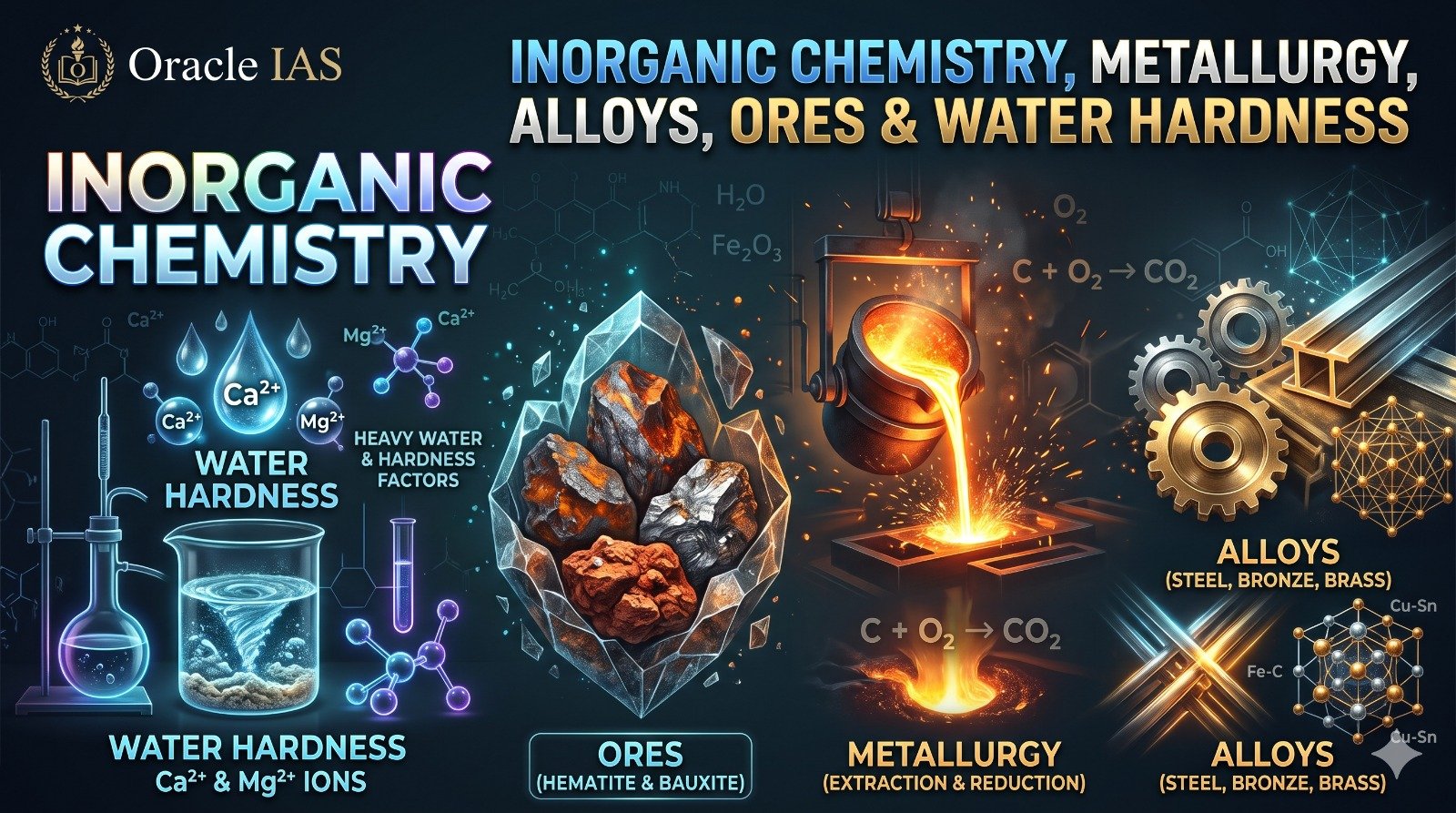
Inorganic Chemistry, Metallurgy, Alloys, Ores & Water Hardness

UKPSC Chemistry: Inorganic Chemistry, Metallurgy, Alloys, Ores & Water Hardness (Solved PYQs & Notes)

UKPSC Chemistry Unit 2: Inorganic Chemistry, Metallurgy, Alloys, Ores & Water Hardness Part of the UKPSC General Science & Technology Revision Series. 1.High-Yield Micro-Notes Metallurgy, Alloys & Industrial Hardness: Diamond is the hardest naturally occurring allotrope of carbon, defined by an sp³ hybridized tetrahedral lattice. Alkali metals like Sodium (Na) and Potassium (K) are soft

UKPSC Chemistry: Inorganic Chemistry, Metallurgy, Alloys, Ores & Water Hardness (Solved PYQs & Notes) Read More »

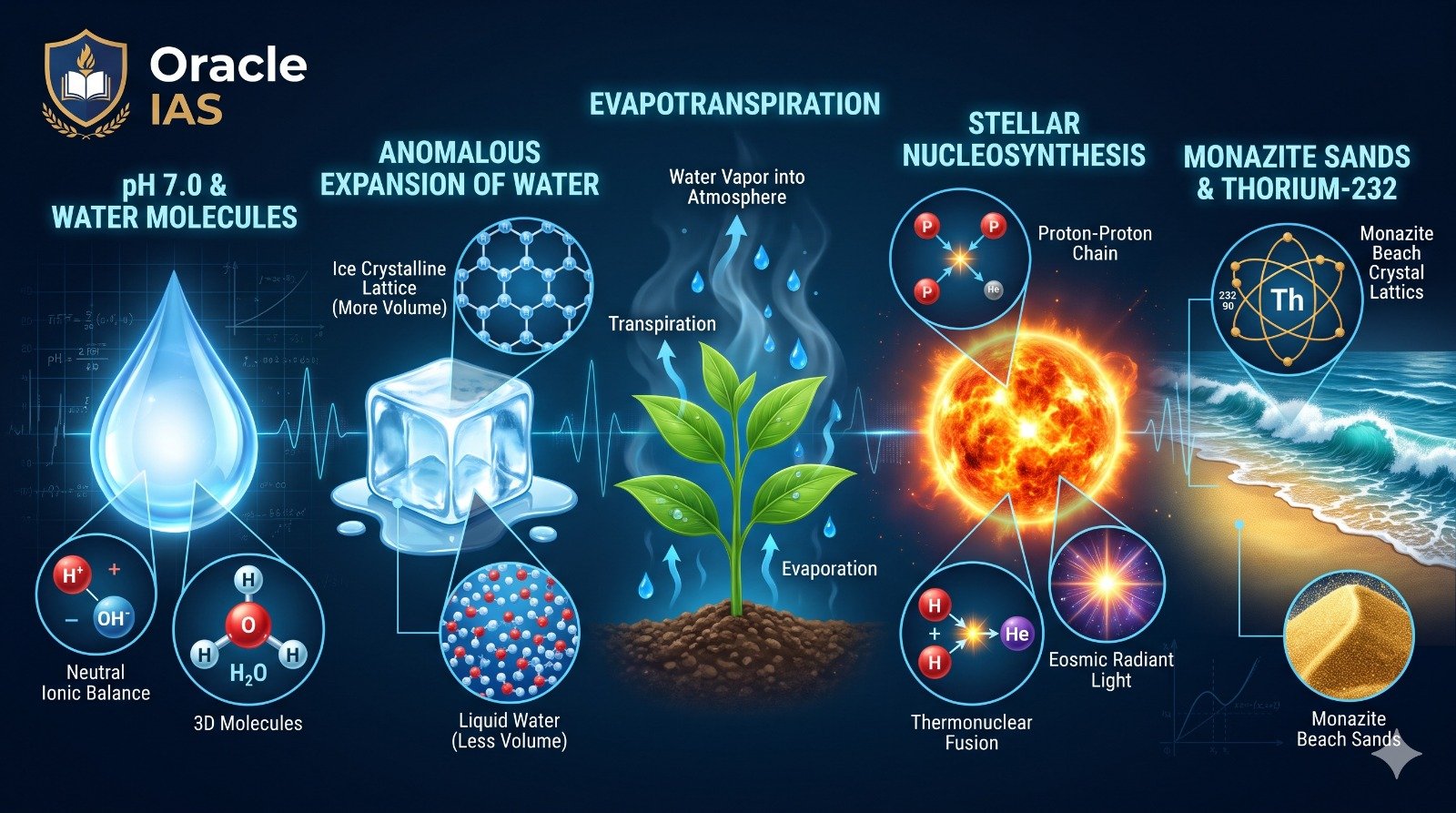
Physical Chemistry, States of Matter, pH Scale & Water Properties

UKPSC Chemistry: Physical Chemistry, States of Matter, pH Scale & Water Properties (Solved PYQs & Notes)

UKPSC Chemistry Unit 1: Physical Chemistry, States of Matter, pH Scale & Water Properties 1.High-Yield Micro-Notes Aqueous Equilibria & Neutrality: The pH scale, formulated in 1909 by S.P.L. Sørensen, defines hydrogen ion concentration as pH = -log₁₀[H⁺]. Pure neutral water at 25 °C dissociates equally into H⁺ and OH⁻ ions (each 10⁻⁷ mol/L), yielding an

UKPSC Chemistry: Physical Chemistry, States of Matter, pH Scale & Water Properties (Solved PYQs & Notes) Read More »

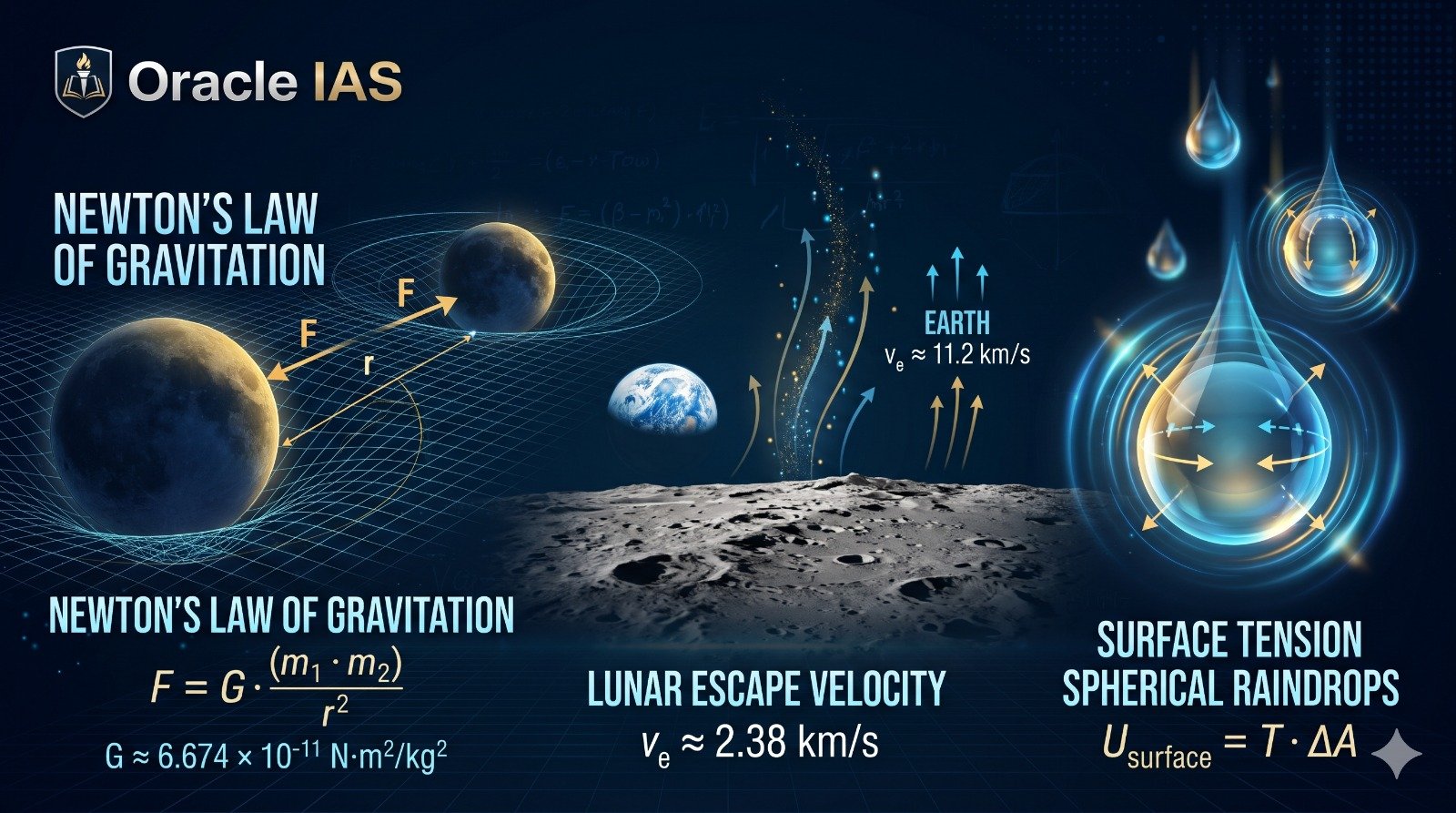
Gravitation, Fluid Properties, Escape Velocity & Astronomy

UKPSC Physics: Gravitation, Fluid Properties, Escape Velocity & Astronomy (Solved PYQs & Notes)

UKPSC Physics Unit 9: Gravitation, Fluid Properties, Escape Velocity & Astronomy 1. High-Yield Micro-Notes Universal Law of Gravitation: Formulated by Sir Isaac Newton in 1687 (published in Philosophiae Naturalis Principia Mathematica), the law states that every particle attracts every other particle with a mutual force directly proportional to the product of their masses and inversely

UKPSC Physics: Gravitation, Fluid Properties, Escape Velocity & Astronomy (Solved PYQs & Notes) Read More »

UPPCS Pre Revision #11: Architecture, Museums, Archives & Archaeological Sites of Uttar Pradesh

1. Introduction: Why Uttar Pradesh’s Heritage Matters Uttar Pradesh preserves remains of several major historical periods—from ancient urban settlements and Buddhist monasteries to Gupta temples, medieval forts, Mughal monuments, Awadh architecture and colonial buildings. For UPPCS Prelims, this topic is best prepared through four categories: Architecture and monuments: Identify the building, location, period, patron and

UPPCS Pre Revision #11: Architecture, Museums, Archives & Archaeological Sites of Uttar Pradesh Read More »

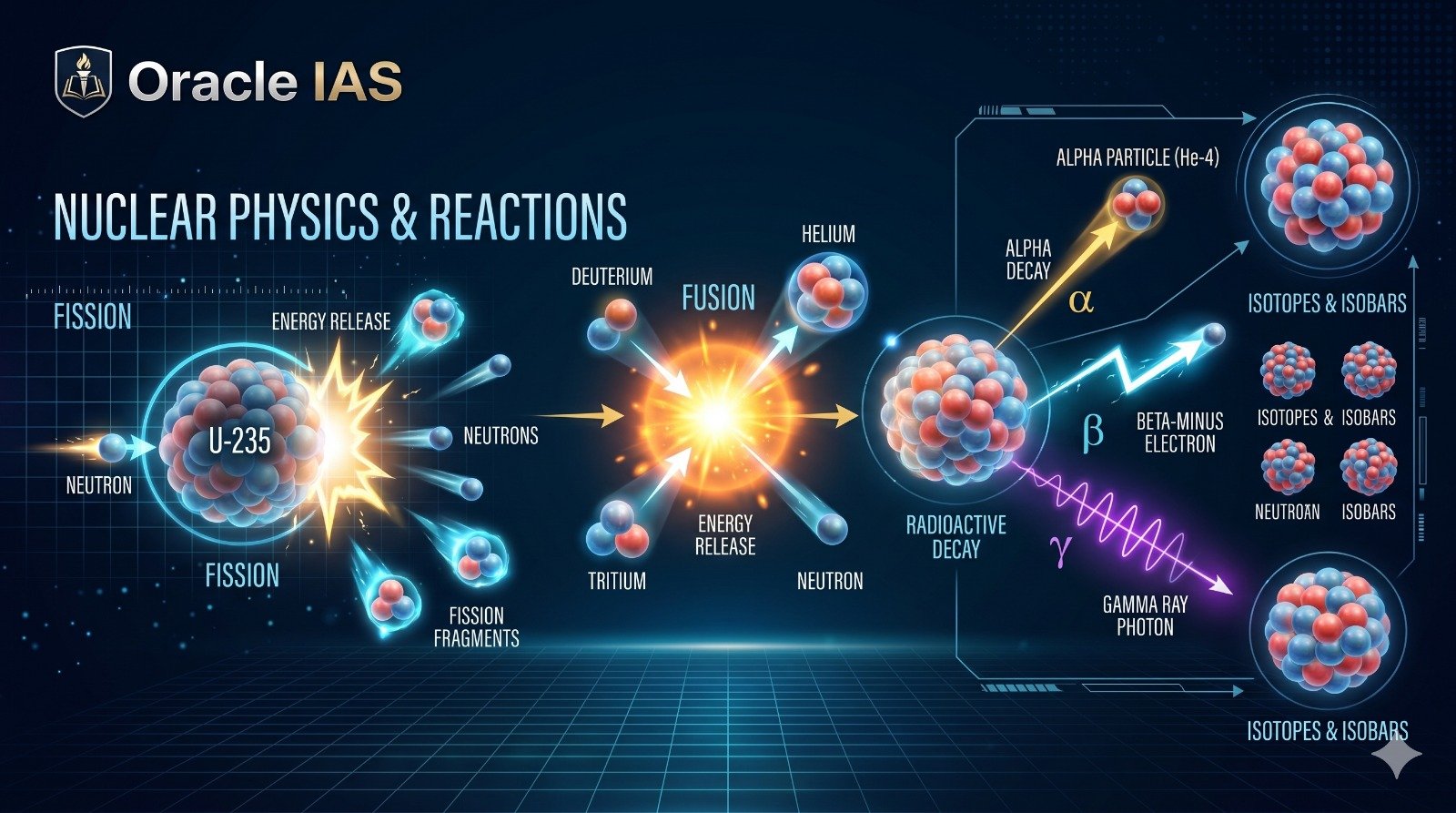
Modern & Nuclear Physics, Radioactivity, Fission & Fusion

UKPSC Physics: Modern & Nuclear Physics, Radioactivity, Fission & Fusion (Solved PYQs & Notes)

UKPSC Physics Unit 8: Modern & Nuclear Physics, Radioactivity, Fission & Fusion 1. High-Yield Micro-Notes Radioactivity & Emission Dynamics: Natural radioactivity was discovered in 1896 by French physicist Henri Becquerel (SI unit: Becquerel, Bq). Radioactive decay spontaneously emits three distinct types of radiation: alpha (α) particles (doubly ionized helium nuclei, ⁴₂He²⁺), beta (β) particles (high-speed

UKPSC Physics: Modern & Nuclear Physics, Radioactivity, Fission & Fusion (Solved PYQs & Notes) Read More »

UPPCS Pre Revision #10: UP Freedom Fighters & Personalities

Uttar Pradesh played a central role in India’s freedom struggle, from the Revolt of 1857 to the revolutionary activities of the Kakori group, Gandhian mass movements, peasant uprisings and the Quit India Movement. For UPPCS Prelims, focus on four dimensions: personality–district associations, organisations, movements and important dates. Also distinguish a person’s birthplace from the place

UPPCS Pre Revision #10: UP Freedom Fighters & Personalities Read More »

Magnetism, Magnetic Dipoles & Electromagnetic Induction

UKPSC Physics: Magnetism, Magnetic Dipoles & Electromagnetic Induction (Solved PYQs & Notes)

UKPSC Physics Unit 7: Magnetism, Magnetic Dipoles & Electromagnetic Induction 1. High-Yield Micro-Notes Fundamental Laws of Magnetism: Magnetic poles always exist in dipoles (isolated magnetic monopoles do not exist in nature). Like poles repel each other, while unlike poles attract each other. The magnetic force between two magnetic poles follows Coulomb’s Inverse Square Law of

UKPSC Physics: Magnetism, Magnetic Dipoles & Electromagnetic Induction (Solved PYQs & Notes) Read More »