Hemant Bhatt

Hemant Bhatt is a B. Tech from Pantnagar University and has studied Social Sciences at SciencesPo, Paris. He teaches at Oracle IAS, Dehradun. He has given 5 UPSC mains back to back along with 2 interviews. He is a bibliophile,accomplished writer and a fitness enthusiast.

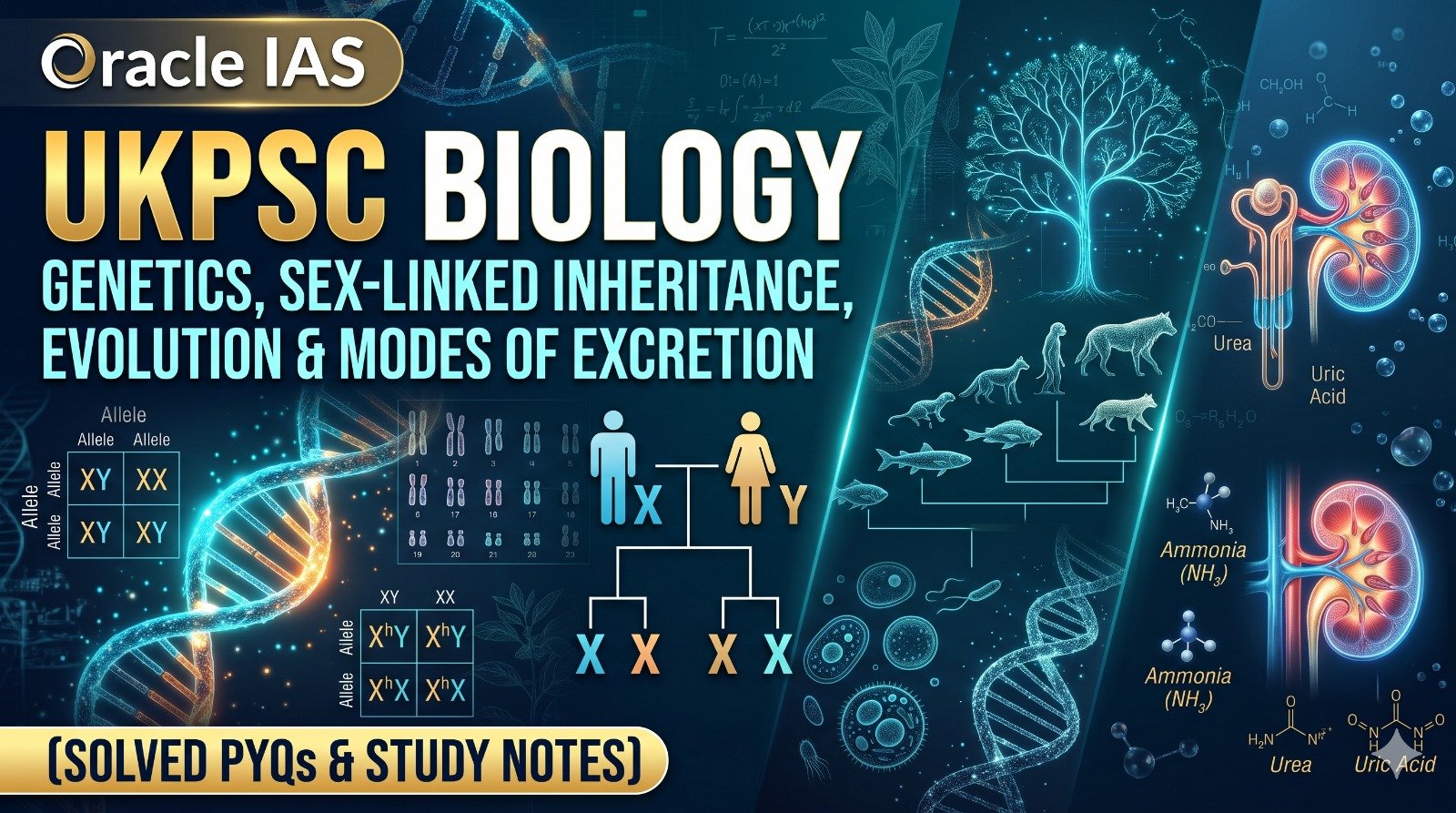
Genetics, Sex-Linked Inheritance, Evolution & Modes of Excretion 

UKPSC Biology: Genetics, Sex-Linked Inheritance, Evolution & Modes of Excretion (Solved PYQs & Notes)

UKPSC Biology (Unit 3): Genetics, Sex-Linked Inheritance, Evolution & Modes of Excretion Part of the UKPSC General Science & Technology Revision Series. 1.High-Yield Micro-Notes Modes of Nitrogenous Excretion: Animals are categorized based on their primary metabolic nitrogenous excretory product: Ammonotelic (excrete highly toxic, water-soluble ammonia requiring abundant water, e.g., bony freshwater fishes, aquatic amphibians), Ureotelic
UKPSC Biology: Genetics, Sex-Linked Inheritance, Evolution & Modes of Excretion (Solved PYQs & Notes) Read More »

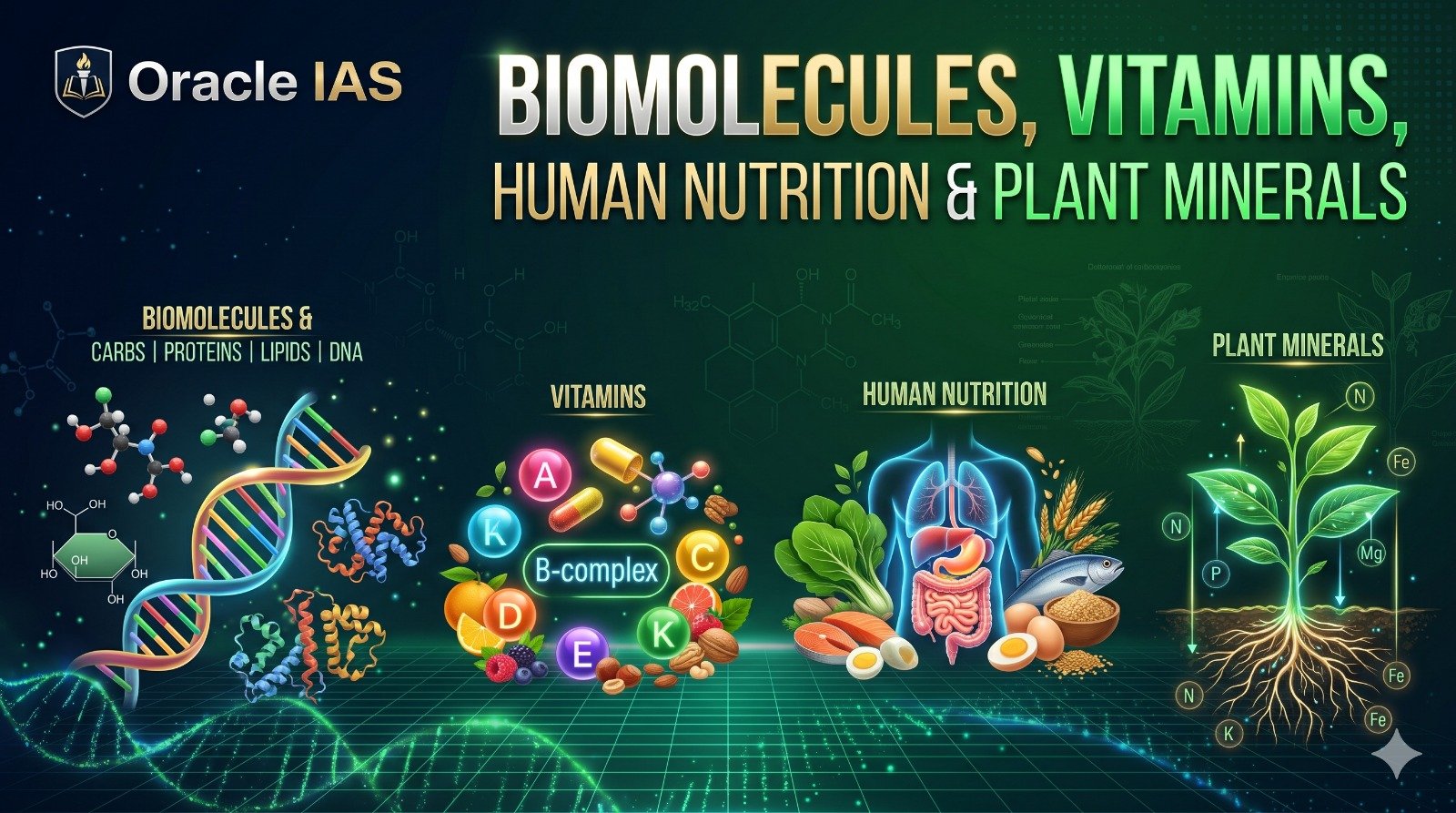
Biomolecules, Vitamins, Human Nutrition & Plant Minerals

UKPSC Biology: Biomolecules, Vitamins, Human Nutrition & Plant Minerals (Solved PYQs & Notes)

UKPSC Biology (Unit 2): Biomolecules, Vitamins, Human Nutrition & Plant Minerals Part of the UKPSC General Science & Technology Revision Series. 1.High-Yield Micro-Notes Vitamins (Nomenclature, Classification & Deficiencies): Vitamins are micro-nutrients that yield zero calories and are assimilated directly without hydrolytic enzymatic digestion. They are grouped by solubility: Water-soluble (Vitamins B-complex and C) and Fat-soluble

UKPSC Biology: Biomolecules, Vitamins, Human Nutrition & Plant Minerals (Solved PYQs & Notes) Read More »

Branches of Biology, Cytology, Chromosomes & Cell Division

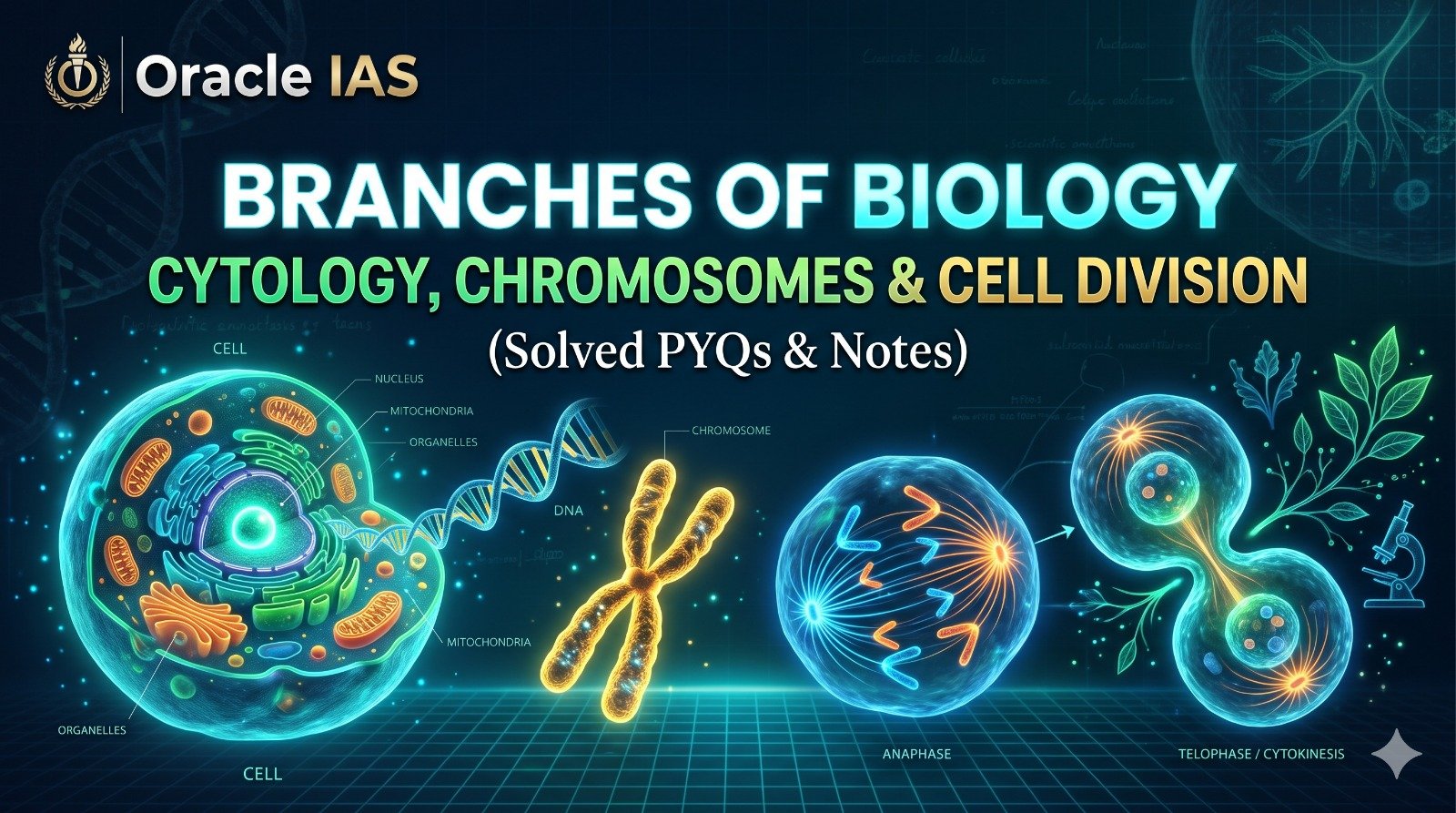
UKPSC Biology: Branches of Biology, Cytology, Chromosomes & Cell Division (Solved PYQs & Notes)

UKPSC Biology (Unit 1): Branches of Biology, Cytology, Chromosomes & Cell Division (Solved PYQs & Notes) Part of the UKPSC General Science & Technology Revision Series. 1.High-Yield Micro-Notes Biological Disciplines & Zoological Branches: The scientific study of insects is designated as Entomology (sub-branch of Arthropodology). In comparison, Ichthyology is the biological study of fishes, Malacology

UKPSC Biology: Branches of Biology, Cytology, Chromosomes & Cell Division (Solved PYQs & Notes) Read More »

Applied Chemistry, Polymers, Cement & Environmental Science

UKPSC Chemistry: Applied Chemistry, Polymers, Cement & Environmental Science (Solved PYQs & Notes)

UKPSC Chemistry (Unit 4): Applied Chemistry, Polymers, Cement & Environmental Science Part of the UKPSC General Science & Technology Revision Series. 1.High-Yield Micro-Notes Environmental Chemistry & Atmospheric Acidity: Normal clean precipitation exhibits an inherent slight acidity (pH ≈ 5.6) due to the dissolution of atmospheric carbon dioxide forming weak carbonic acid (CO₂ + H₂O →

UKPSC Chemistry: Applied Chemistry, Polymers, Cement & Environmental Science (Solved PYQs & Notes) Read More »

Organic Chemistry, Hydrocarbons, Fuels, LPG & Carbon Allotropes

UKPSC Chemistry: Organic Chemistry, Hydrocarbons, Fuels, LPG & Carbon Allotropes (Solved PYQs & Notes)

UKPSC Chemistry Unit 3: Organic Chemistry, Hydrocarbons, Fuels, LPG & Carbon Allotropes Part of the UKPSC General Science & Technology Revision Series. 1.High-Yield Micro-Notes Hydrocarbons & Gaseous Fuels: Methane (CH₄) is the primary constituent of natural gas, Compressed Natural Gas (CNG ≈ 85–95%), and biogas/gobar gas (55–65%). Known historically as marsh gas, it is produced

UKPSC Chemistry: Organic Chemistry, Hydrocarbons, Fuels, LPG & Carbon Allotropes (Solved PYQs & Notes) Read More »

Inorganic Chemistry, Metallurgy, Alloys, Ores & Water Hardness

UKPSC Chemistry: Inorganic Chemistry, Metallurgy, Alloys, Ores & Water Hardness (Solved PYQs & Notes)

UKPSC Chemistry Unit 2: Inorganic Chemistry, Metallurgy, Alloys, Ores & Water Hardness Part of the UKPSC General Science & Technology Revision Series. 1.High-Yield Micro-Notes Metallurgy, Alloys & Industrial Hardness: Diamond is the hardest naturally occurring allotrope of carbon, defined by an sp³ hybridized tetrahedral lattice. Alkali metals like Sodium (Na) and Potassium (K) are soft

UKPSC Chemistry: Inorganic Chemistry, Metallurgy, Alloys, Ores & Water Hardness (Solved PYQs & Notes) Read More »

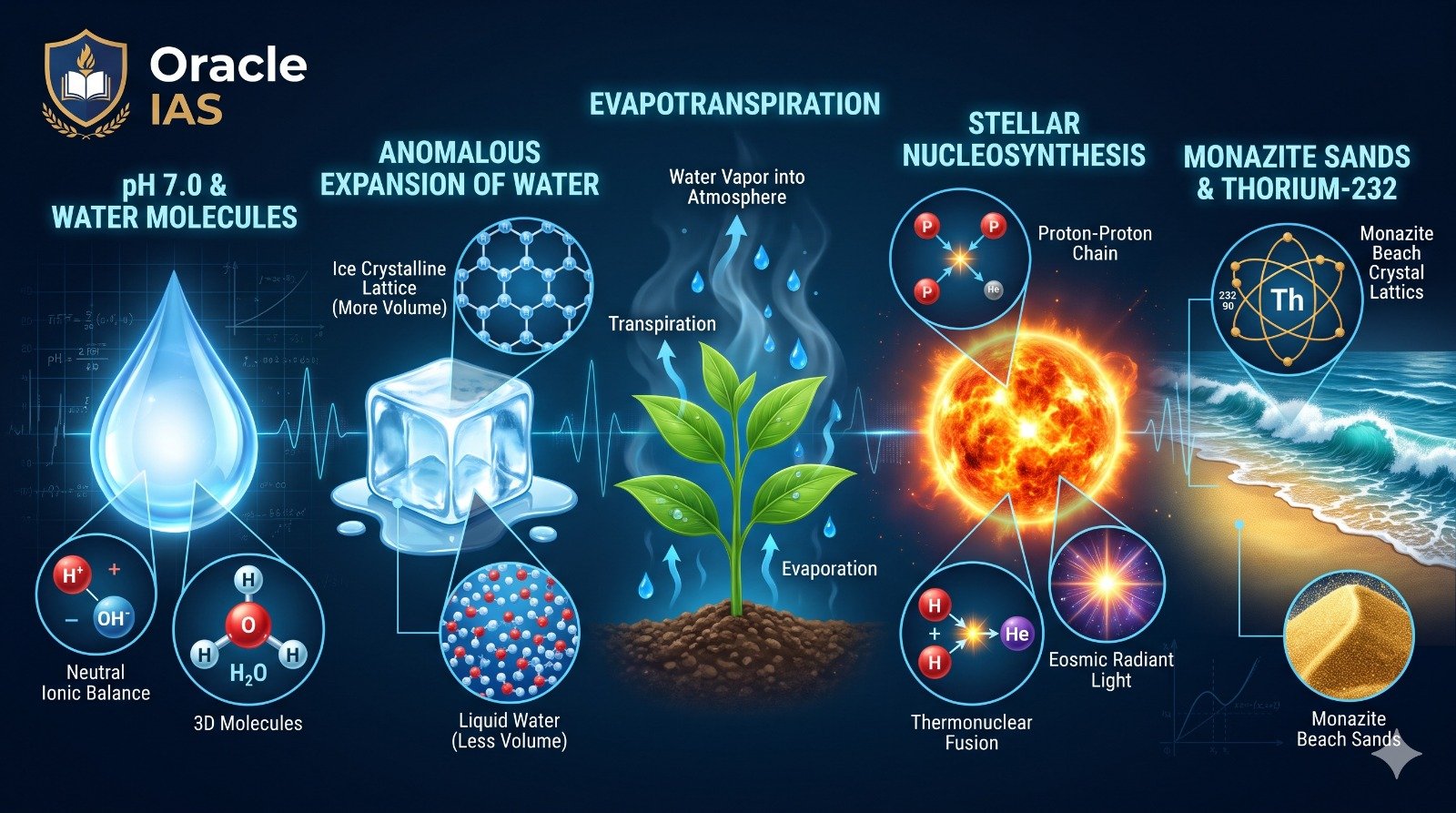
Physical Chemistry, States of Matter, pH Scale & Water Properties

UKPSC Chemistry: Physical Chemistry, States of Matter, pH Scale & Water Properties (Solved PYQs & Notes)

UKPSC Chemistry Unit 1: Physical Chemistry, States of Matter, pH Scale & Water Properties 1.High-Yield Micro-Notes Aqueous Equilibria & Neutrality: The pH scale, formulated in 1909 by S.P.L. Sørensen, defines hydrogen ion concentration as pH = -log₁₀[H⁺]. Pure neutral water at 25 °C dissociates equally into H⁺ and OH⁻ ions (each 10⁻⁷ mol/L), yielding an

UKPSC Chemistry: Physical Chemistry, States of Matter, pH Scale & Water Properties (Solved PYQs & Notes) Read More »

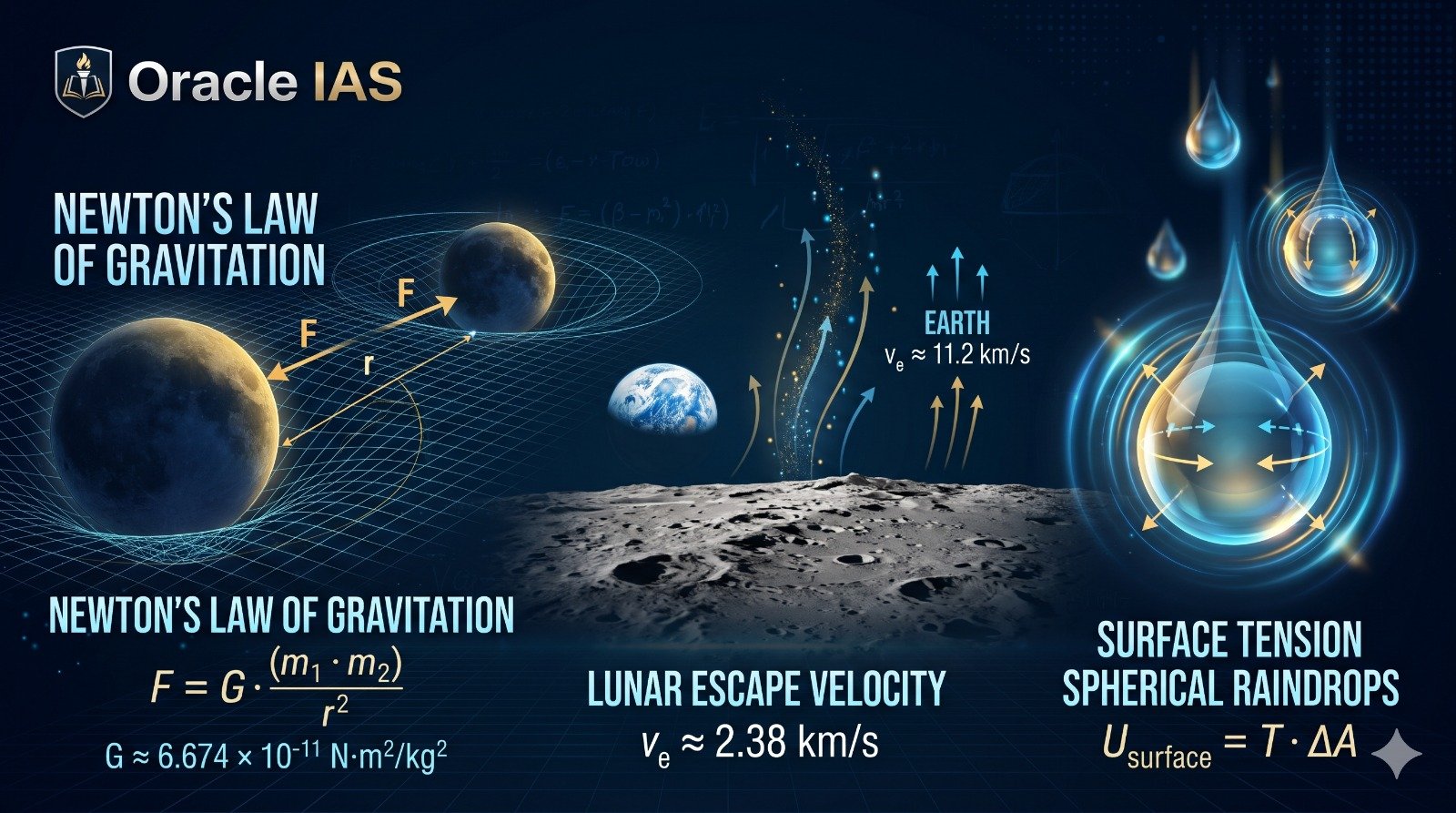
Gravitation, Fluid Properties, Escape Velocity & Astronomy

UKPSC Physics: Gravitation, Fluid Properties, Escape Velocity & Astronomy (Solved PYQs & Notes)

UKPSC Physics Unit 9: Gravitation, Fluid Properties, Escape Velocity & Astronomy 1. High-Yield Micro-Notes Universal Law of Gravitation: Formulated by Sir Isaac Newton in 1687 (published in Philosophiae Naturalis Principia Mathematica), the law states that every particle attracts every other particle with a mutual force directly proportional to the product of their masses and inversely

UKPSC Physics: Gravitation, Fluid Properties, Escape Velocity & Astronomy (Solved PYQs & Notes) Read More »

UPPCS Pre Revision #11: Architecture, Museums, Archives & Archaeological Sites of Uttar Pradesh

1. Introduction: Why Uttar Pradesh’s Heritage Matters Uttar Pradesh preserves remains of several major historical periods—from ancient urban settlements and Buddhist monasteries to Gupta temples, medieval forts, Mughal monuments, Awadh architecture and colonial buildings. For UPPCS Prelims, this topic is best prepared through four categories: Architecture and monuments: Identify the building, location, period, patron and

UPPCS Pre Revision #11: Architecture, Museums, Archives & Archaeological Sites of Uttar Pradesh Read More »

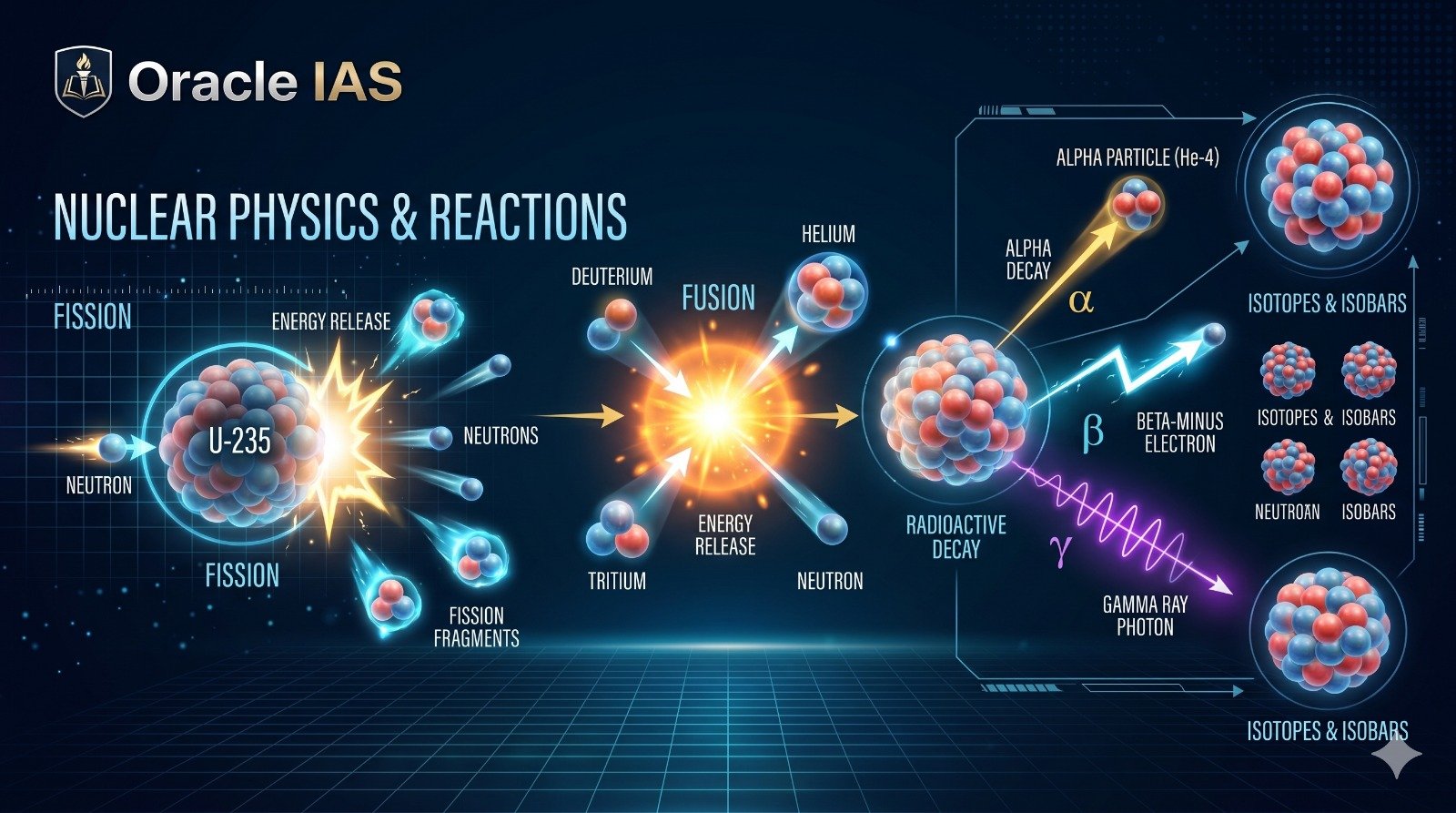
Modern & Nuclear Physics, Radioactivity, Fission & Fusion

UKPSC Physics: Modern & Nuclear Physics, Radioactivity, Fission & Fusion (Solved PYQs & Notes)

UKPSC Physics Unit 8: Modern & Nuclear Physics, Radioactivity, Fission & Fusion 1. High-Yield Micro-Notes Radioactivity & Emission Dynamics: Natural radioactivity was discovered in 1896 by French physicist Henri Becquerel (SI unit: Becquerel, Bq). Radioactive decay spontaneously emits three distinct types of radiation: alpha (α) particles (doubly ionized helium nuclei, ⁴₂He²⁺), beta (β) particles (high-speed

UKPSC Physics: Modern & Nuclear Physics, Radioactivity, Fission & Fusion (Solved PYQs & Notes) Read More »