UKPCS Prelims Science Revision

Miscellaneous Biology, Biotechnology & Applied Life Sciences

UKPSC Biology: Miscellaneous Biology, Biotechnology & Applied Life Sciences (Solved PYQs & Notes)

UKPSC Biology (Unit 10): Miscellaneous Biology, Biotechnology & Applied Life Sciences Part of the UKPSC General Science & Technology Revision Series. 1. High-Yield Micro-Notes Microbial Thermal Classes & Food Technology: Microorganisms are classified by thermal tolerance: Psychrophiles grow best in the range of 0 °C to 15 °C (and below 0 °C, driving spoilage in

UKPSC Biology: Miscellaneous Biology, Biotechnology & Applied Life Sciences (Solved PYQs & Notes) Read More »

Human Diseases, Pathogens, Immunology & Toxicology

UKPSC Biology: Human Diseases, Pathogens, Immunology & Toxicology (Solved PYQs & Notes)

UKPSC Biology (Unit 9): Human Diseases, Pathogens, Immunology & Toxicology Part of the UKPSC General Science & Technology Revision Series. 1.High-Yield Micro-Notes Immunology, Diagnostics & Biotechnology Therapeutics: The term “antibiotic” was coined in 1945 by Selman Waksman (who discovered streptomycin from Streptomyces griseus). To suppress organ rejection following kidney transplantation, targeted monoclonal antibodies (e.g., basiliximab,

UKPSC Biology: Human Diseases, Pathogens, Immunology & Toxicology (Solved PYQs & Notes) Read More »

Human Body Systems, Physiology, Blood Groups & Endocrinology

UKPSC Biology: Human Body Systems, Physiology, Blood Groups & Endocrinology (Solved PYQs & Notes)

UKPSC Biology (Unit 8): Human Body Systems, Physiology, Blood Groups & Endocrinology Part of the UKPSC General Science & Technology Revision Series. 1.High-Yield Micro-Notes Circulatory Dynamics & Hematology: Normal resting adult blood pressure is 120/80 mm Hg (systolic/diastolic); with advancing biological age, arterial walls (notably the aorta) experience arteriosclerotic stiffening, which generally increases systemic blood

UKPSC Biology: Human Body Systems, Physiology, Blood Groups & Endocrinology (Solved PYQs & Notes) Read More »

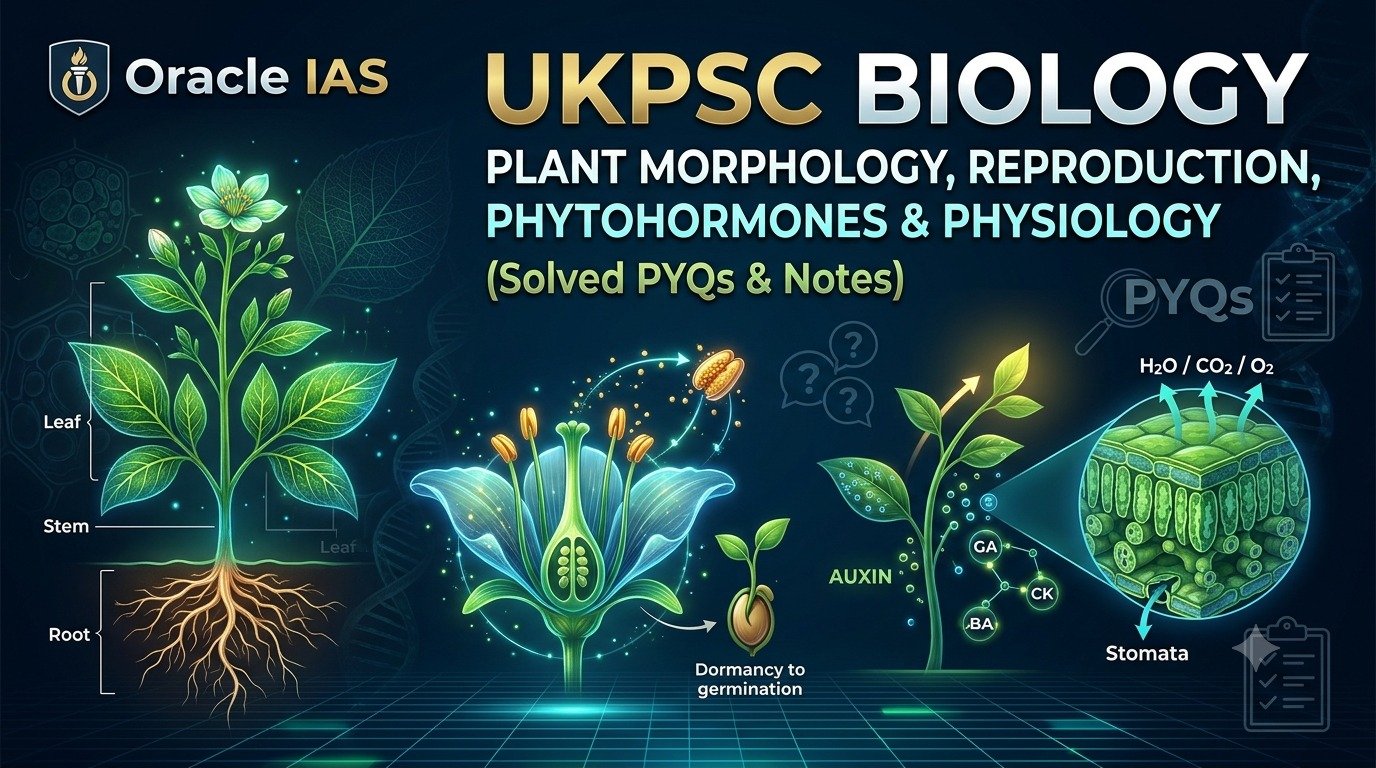
Plant Morphology, Reproduction, Phytohormones & Physiology

UKPSC Biology: Plant Morphology, Reproduction, Phytohormones & Physiology (Solved PYQs & Notes)

UKPSC Biology (Unit 7): Plant Morphology, Reproduction, Phytohormones & Physiology Part of the UKPSC General Science & Technology Revision Series. 1.High-Yield Micro-Notes Root Morphology & Water Uptake: Standard plant roots anchor the plant, store assimilates, and absorb moisture and mineral nutrients; roots do not participate in photosynthesis (except specialized assimilatory roots like Tinospora and Trapa).

UKPSC Biology: Plant Morphology, Reproduction, Phytohormones & Physiology (Solved PYQs & Notes) Read More »

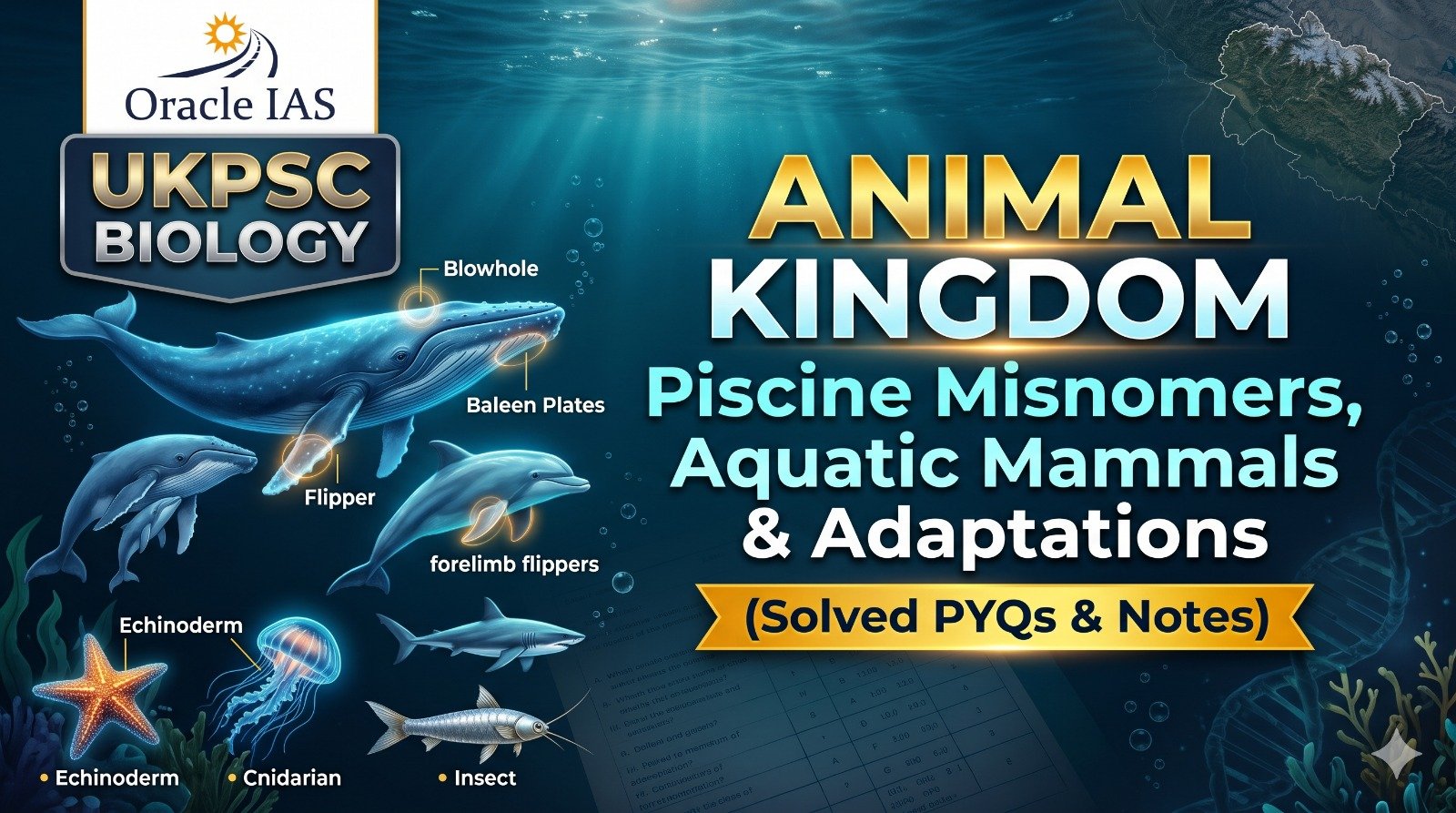
Animal Kingdom, Piscine Misnomers, Aquatic Mammals & Adaptations

UKPSC Biology: Animal Kingdom, Piscine Misnomers, Aquatic Mammals & Adaptations (Solved PYQs & Notes)

UKPSC Biology (Unit 6): Animal Kingdom, Piscine Misnomers, Aquatic Mammals & Adaptations Part of the UKPSC General Science & Technology Revision Series. 1.High-Yield Micro-Notes Pisces vs. Common Zoological Misnomers: True fishes (super-class Pisces) possess a vertebral column, paired fins, two-chambered venous hearts, and breathe dissolved aquatic oxygen via vascularized gills (branchial respiration). In standard zoological

UKPSC Biology: Animal Kingdom, Piscine Misnomers, Aquatic Mammals & Adaptations (Solved PYQs & Notes) Read More »

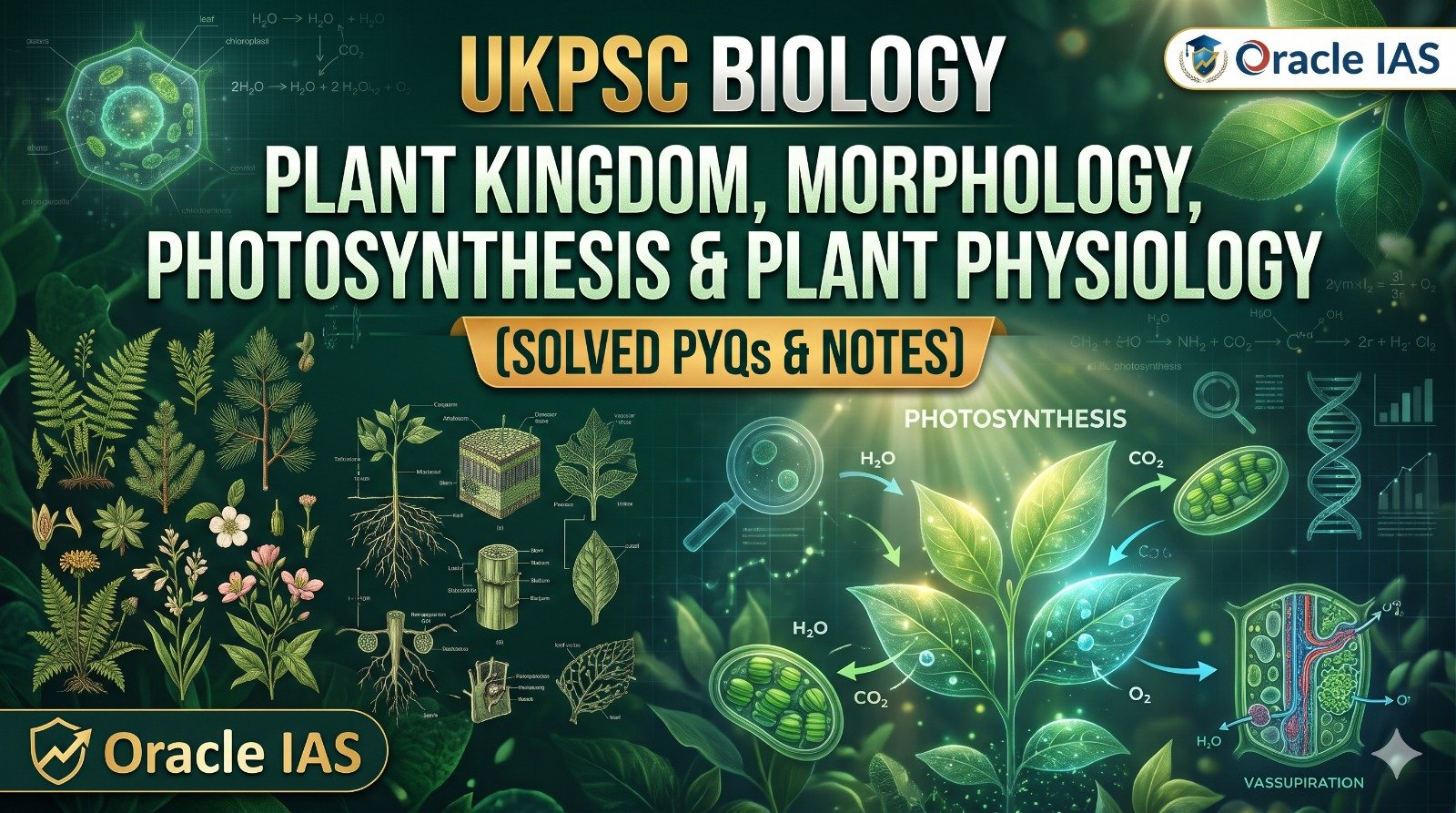
Plant Kingdom, Morphology, Photosynthesis & Plant Physiology

UKPSC Biology: Plant Kingdom, Morphology, Photosynthesis & Plant Physiology (Solved PYQs & Notes)

UKPSC Biology (Unit 5): Plant Kingdom, Morphology, Photosynthesis & Plant Physiology Part of the UKPSC General Science & Technology Revision Series. 1.High-Yield Micro-Notes Photosynthetic Energetics & Action Spectrum: Photosynthesis transforms radiant solar energy into stable chemical bond energy (6CO₂ + 12H₂O + Photons → C₆H₁₂O₆ + 6O₂ + 6H₂O), with atmospheric Carbon Dioxide (CO₂) acting

UKPSC Biology: Plant Kingdom, Morphology, Photosynthesis & Plant Physiology (Solved PYQs & Notes) Read More »

Biological Classification, Monera, Fungi & Plant Diversity

UKPSC Biology: Biological Classification, Monera, Fungi & Plant Diversity (Solved PYQs & Notes)

UKPSC Biology (Unit 4): Biological Classification, Monera, Fungi & Plant Diversity Part of the UKPSC General Science & Technology Revision Series. 1.High-Yield Micro-Notes Taxonomic Systems & Plant Phylogeny: Plant classification systems are categorized by taxonomic philosophy: Artificial (Carolus Linnaeus, based on superficial floral traits like stamen count in Systema Naturae), Natural (George Bentham and Joseph

UKPSC Biology: Biological Classification, Monera, Fungi & Plant Diversity (Solved PYQs & Notes) Read More »

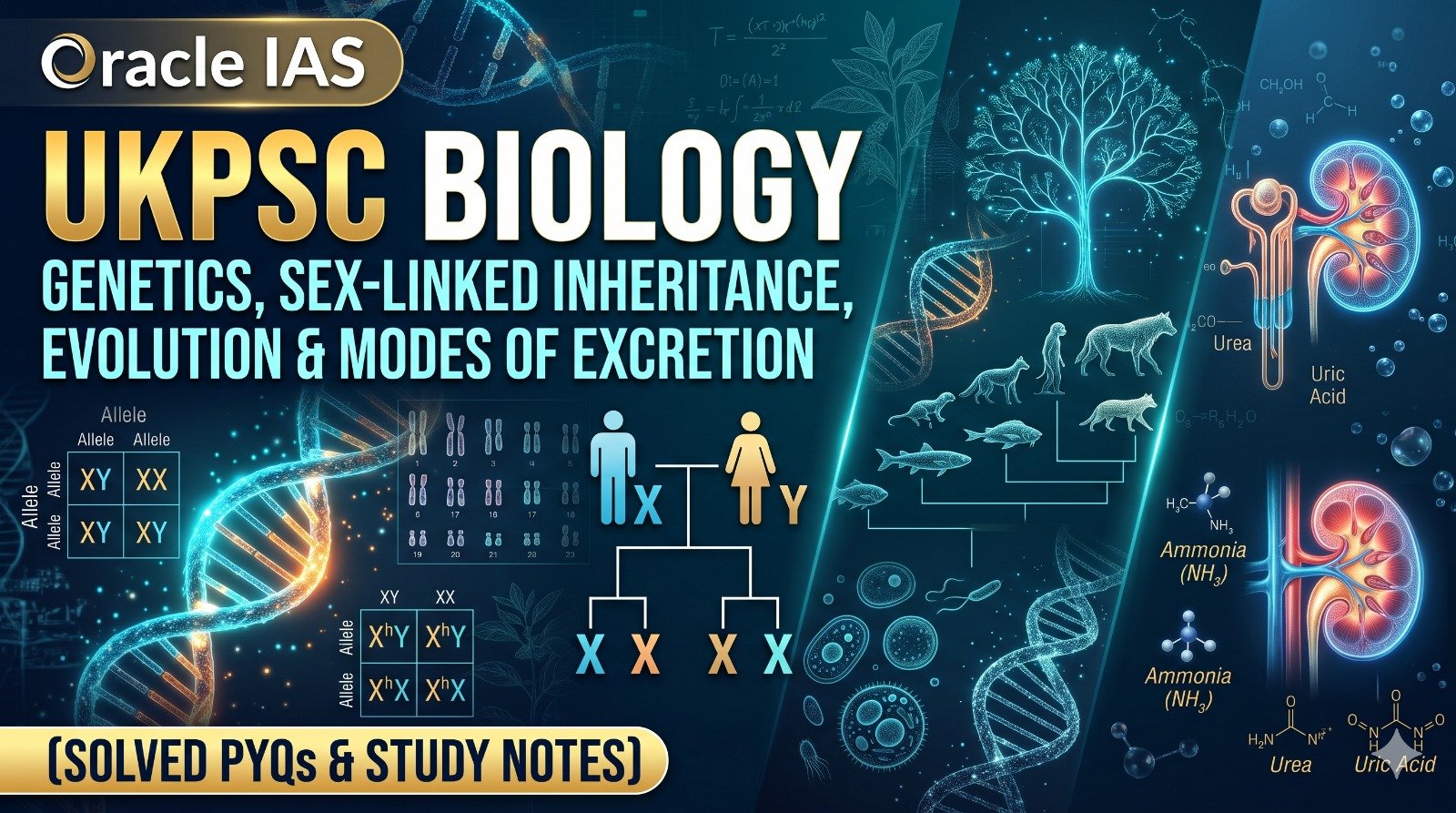
Genetics, Sex-Linked Inheritance, Evolution & Modes of Excretion 

UKPSC Biology: Genetics, Sex-Linked Inheritance, Evolution & Modes of Excretion (Solved PYQs & Notes)

UKPSC Biology (Unit 3): Genetics, Sex-Linked Inheritance, Evolution & Modes of Excretion Part of the UKPSC General Science & Technology Revision Series. 1.High-Yield Micro-Notes Modes of Nitrogenous Excretion: Animals are categorized based on their primary metabolic nitrogenous excretory product: Ammonotelic (excrete highly toxic, water-soluble ammonia requiring abundant water, e.g., bony freshwater fishes, aquatic amphibians), Ureotelic

UKPSC Biology: Genetics, Sex-Linked Inheritance, Evolution & Modes of Excretion (Solved PYQs & Notes) Read More »

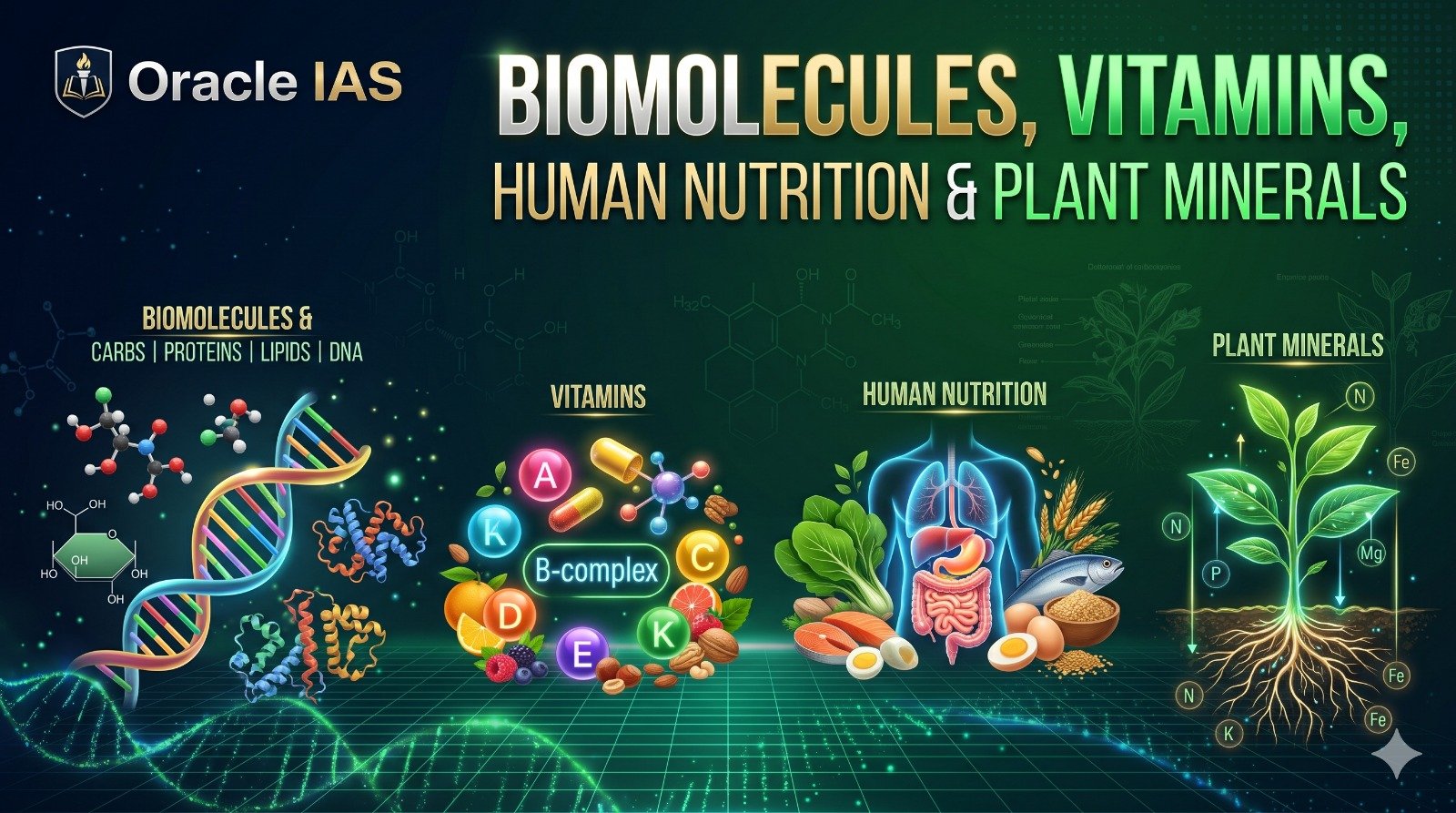
Biomolecules, Vitamins, Human Nutrition & Plant Minerals

UKPSC Biology: Biomolecules, Vitamins, Human Nutrition & Plant Minerals (Solved PYQs & Notes)

UKPSC Biology (Unit 2): Biomolecules, Vitamins, Human Nutrition & Plant Minerals Part of the UKPSC General Science & Technology Revision Series. 1.High-Yield Micro-Notes Vitamins (Nomenclature, Classification & Deficiencies): Vitamins are micro-nutrients that yield zero calories and are assimilated directly without hydrolytic enzymatic digestion. They are grouped by solubility: Water-soluble (Vitamins B-complex and C) and Fat-soluble

UKPSC Biology: Biomolecules, Vitamins, Human Nutrition & Plant Minerals (Solved PYQs & Notes) Read More »

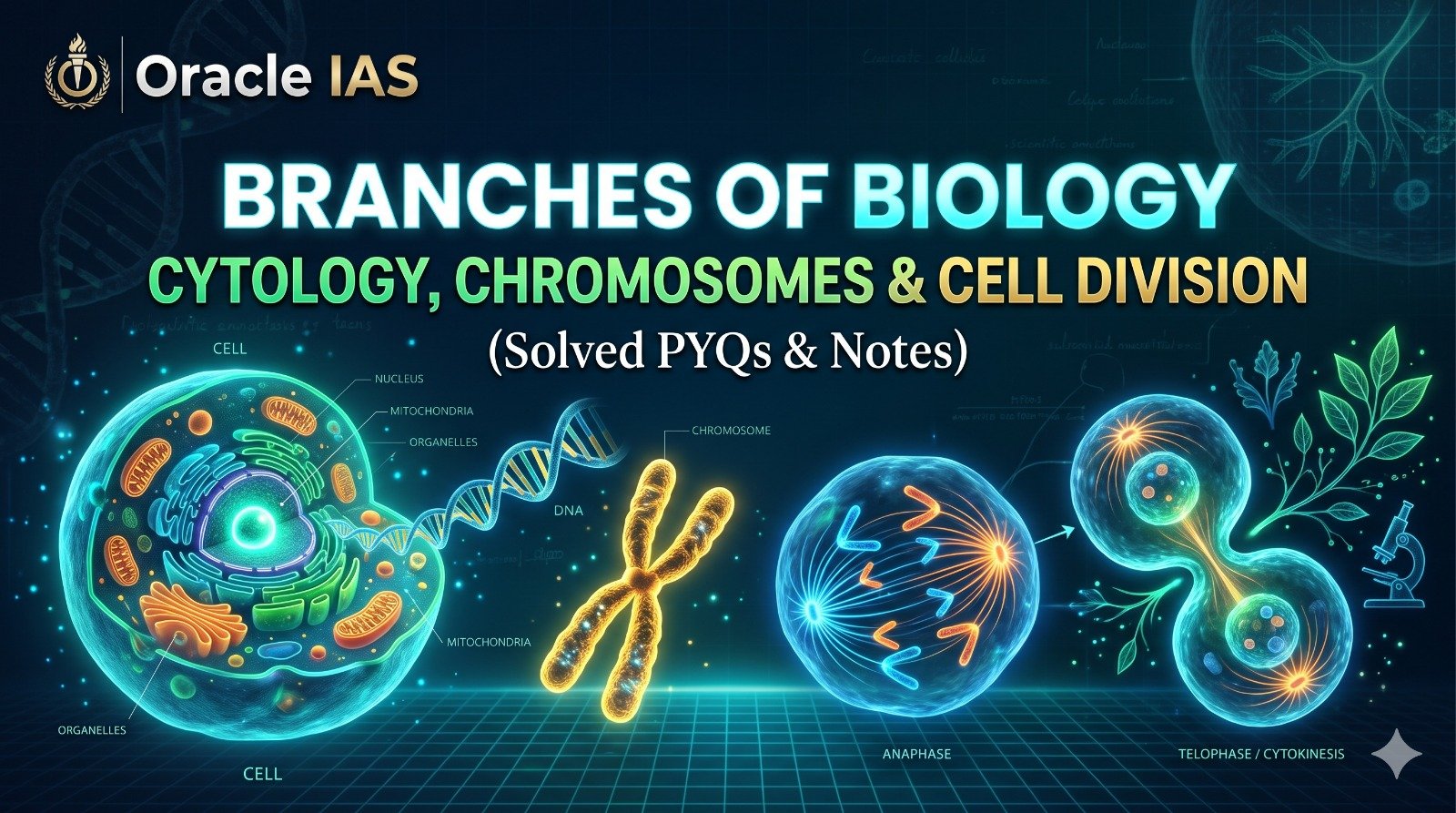
Branches of Biology, Cytology, Chromosomes & Cell Division

UKPSC Biology: Branches of Biology, Cytology, Chromosomes & Cell Division (Solved PYQs & Notes)

UKPSC Biology (Unit 1): Branches of Biology, Cytology, Chromosomes & Cell Division (Solved PYQs & Notes) Part of the UKPSC General Science & Technology Revision Series. 1.High-Yield Micro-Notes Biological Disciplines & Zoological Branches: The scientific study of insects is designated as Entomology (sub-branch of Arthropodology). In comparison, Ichthyology is the biological study of fishes, Malacology

UKPSC Biology: Branches of Biology, Cytology, Chromosomes & Cell Division (Solved PYQs & Notes) Read More »