science ukpcs

Physical Chemistry, States of Matter, pH Scale & Water Properties

UKPSC Chemistry: Physical Chemistry, States of Matter, pH Scale & Water Properties (Solved PYQs & Notes)

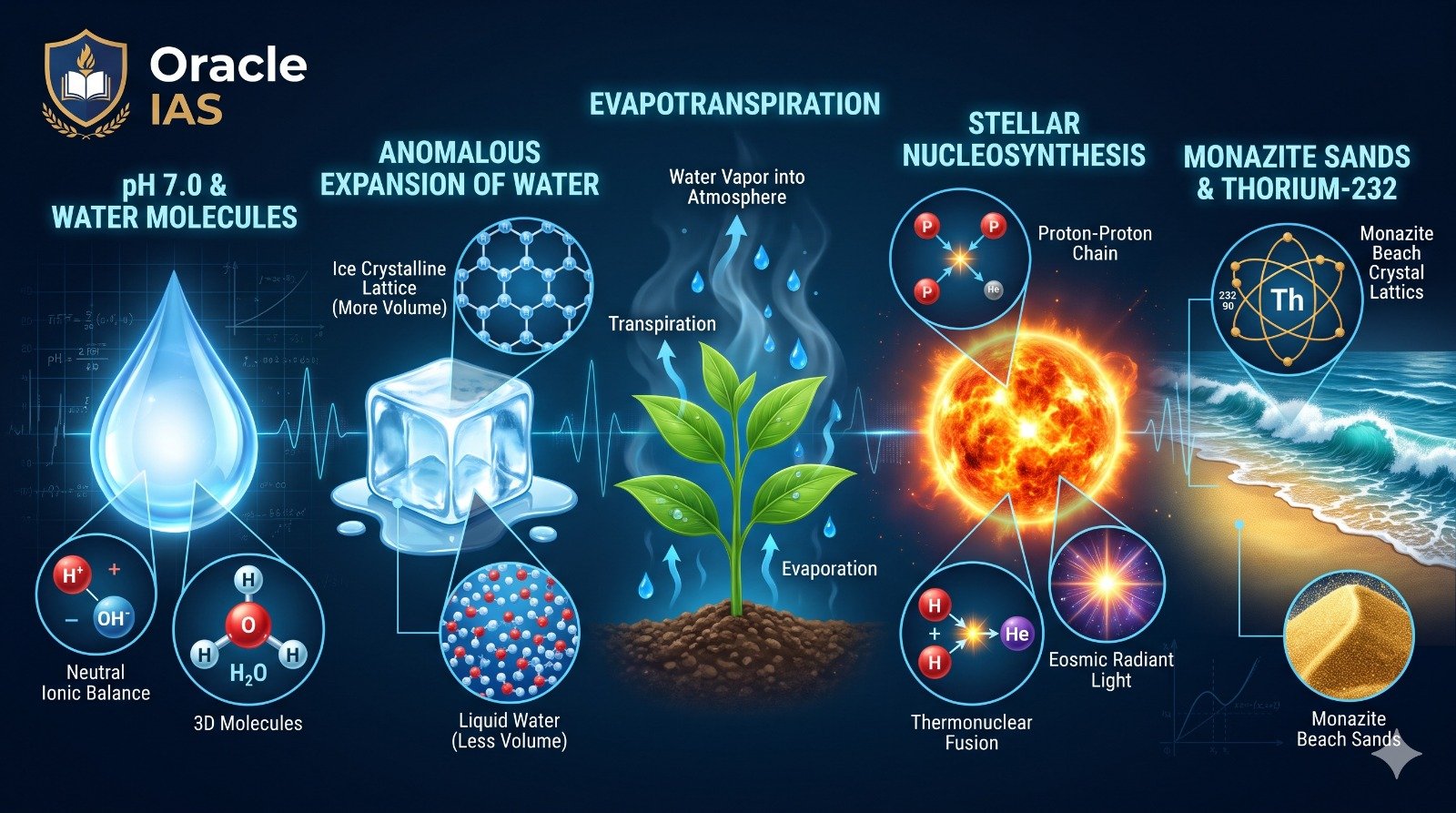
UKPSC Chemistry Unit 1: Physical Chemistry, States of Matter, pH Scale & Water Properties 1.High-Yield Micro-Notes Aqueous Equilibria & Neutrality: The pH scale, formulated in 1909 by S.P.L. Sørensen, defines hydrogen ion concentration as pH = -log₁₀[H⁺]. Pure neutral water at 25 °C dissociates equally into H⁺ and OH⁻ ions (each 10⁻⁷ mol/L), yielding an
UKPSC Chemistry: Physical Chemistry, States of Matter, pH Scale & Water Properties (Solved PYQs & Notes) Read More »

Gravitation, Fluid Properties, Escape Velocity & Astronomy

UKPSC Physics: Gravitation, Fluid Properties, Escape Velocity & Astronomy (Solved PYQs & Notes)

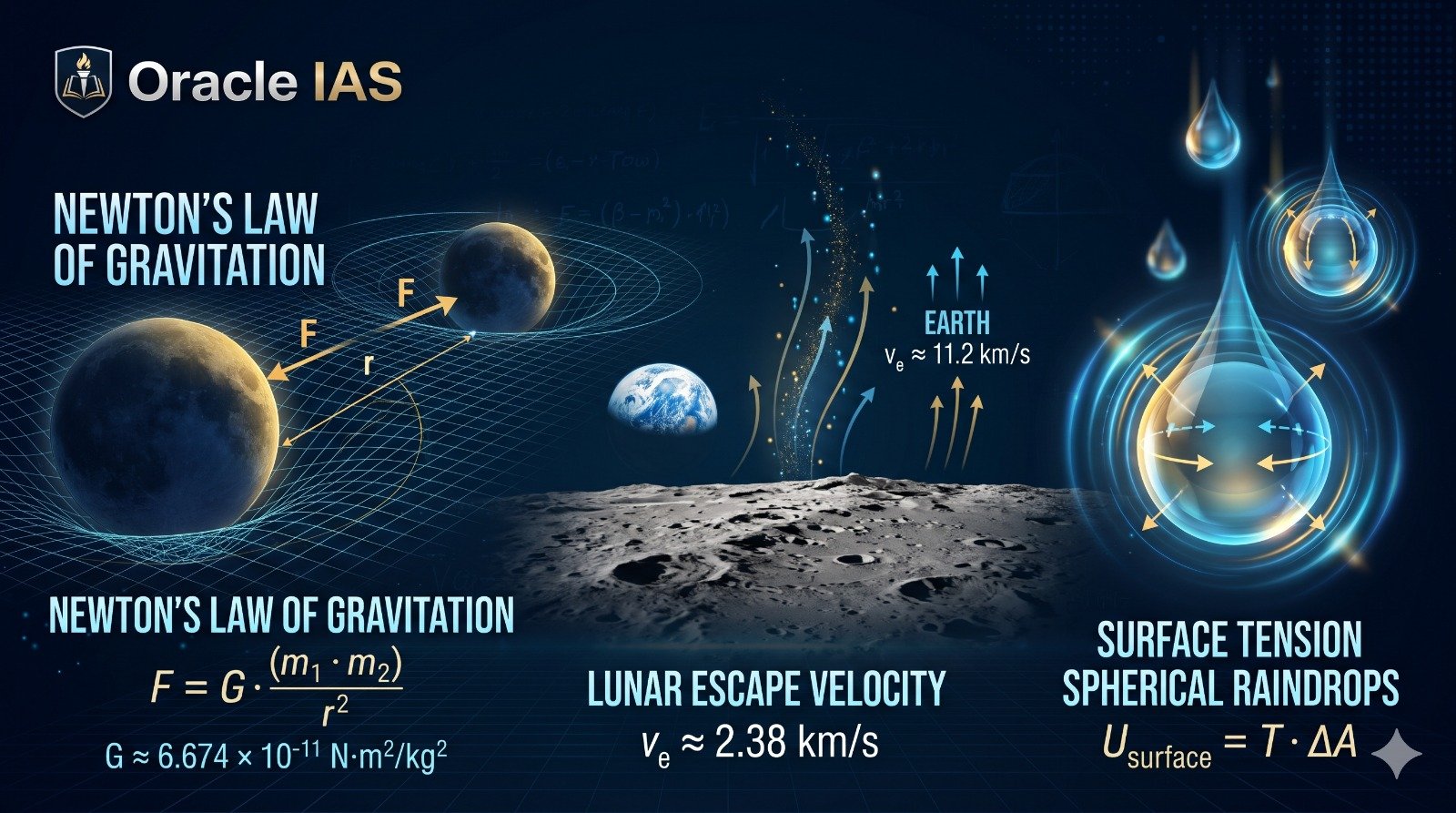
UKPSC Physics Unit 9: Gravitation, Fluid Properties, Escape Velocity & Astronomy 1. High-Yield Micro-Notes Universal Law of Gravitation: Formulated by Sir Isaac Newton in 1687 (published in Philosophiae Naturalis Principia Mathematica), the law states that every particle attracts every other particle with a mutual force directly proportional to the product of their masses and inversely

UKPSC Physics: Gravitation, Fluid Properties, Escape Velocity & Astronomy (Solved PYQs & Notes) Read More »

Modern & Nuclear Physics, Radioactivity, Fission & Fusion

UKPSC Physics: Modern & Nuclear Physics, Radioactivity, Fission & Fusion (Solved PYQs & Notes)

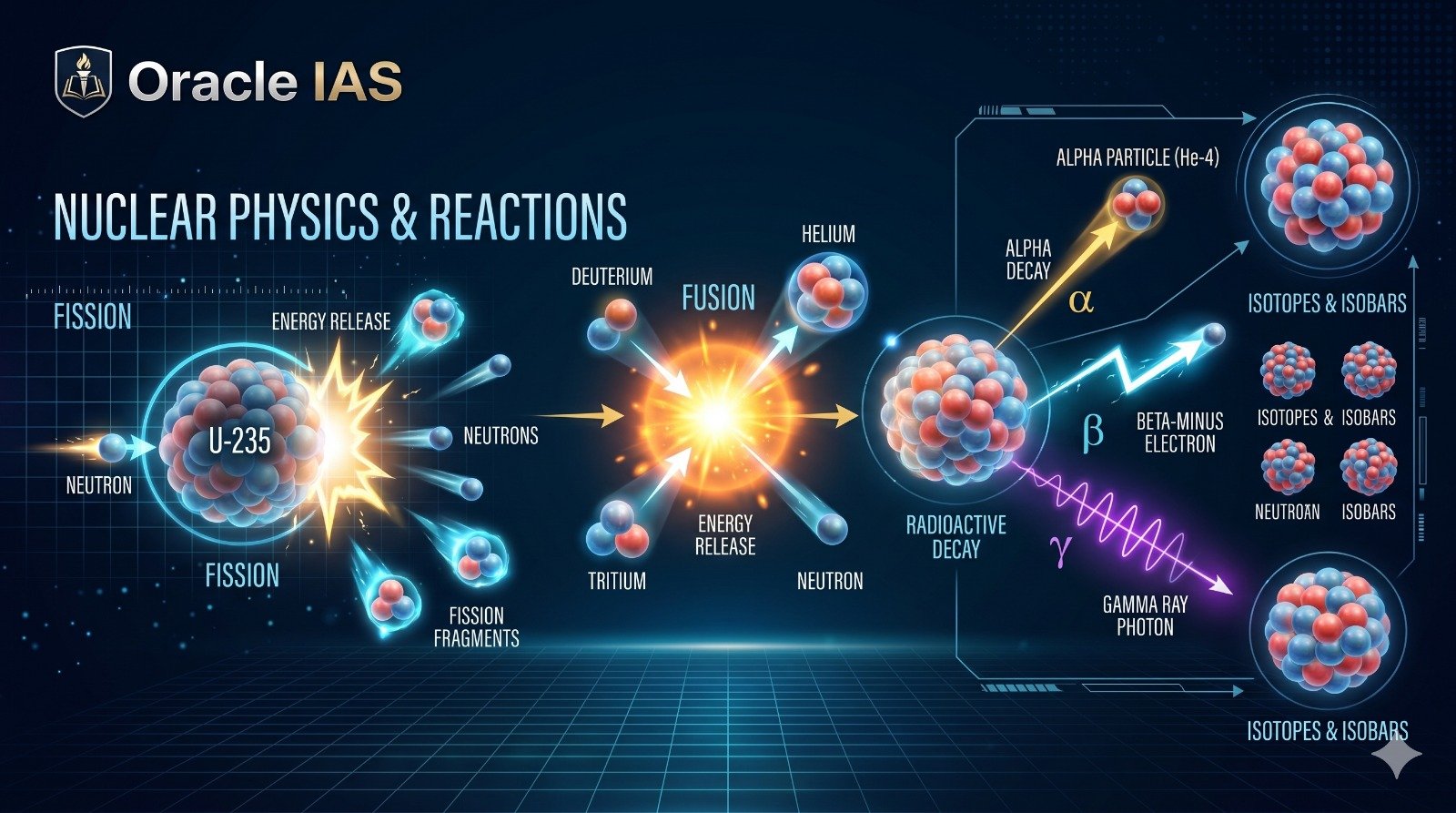
UKPSC Physics Unit 8: Modern & Nuclear Physics, Radioactivity, Fission & Fusion 1. High-Yield Micro-Notes Radioactivity & Emission Dynamics: Natural radioactivity was discovered in 1896 by French physicist Henri Becquerel (SI unit: Becquerel, Bq). Radioactive decay spontaneously emits three distinct types of radiation: alpha (α) particles (doubly ionized helium nuclei, ⁴₂He²⁺), beta (β) particles (high-speed

UKPSC Physics: Modern & Nuclear Physics, Radioactivity, Fission & Fusion (Solved PYQs & Notes) Read More »

Magnetism, Magnetic Dipoles & Electromagnetic Induction

UKPSC Physics: Magnetism, Magnetic Dipoles & Electromagnetic Induction (Solved PYQs & Notes)

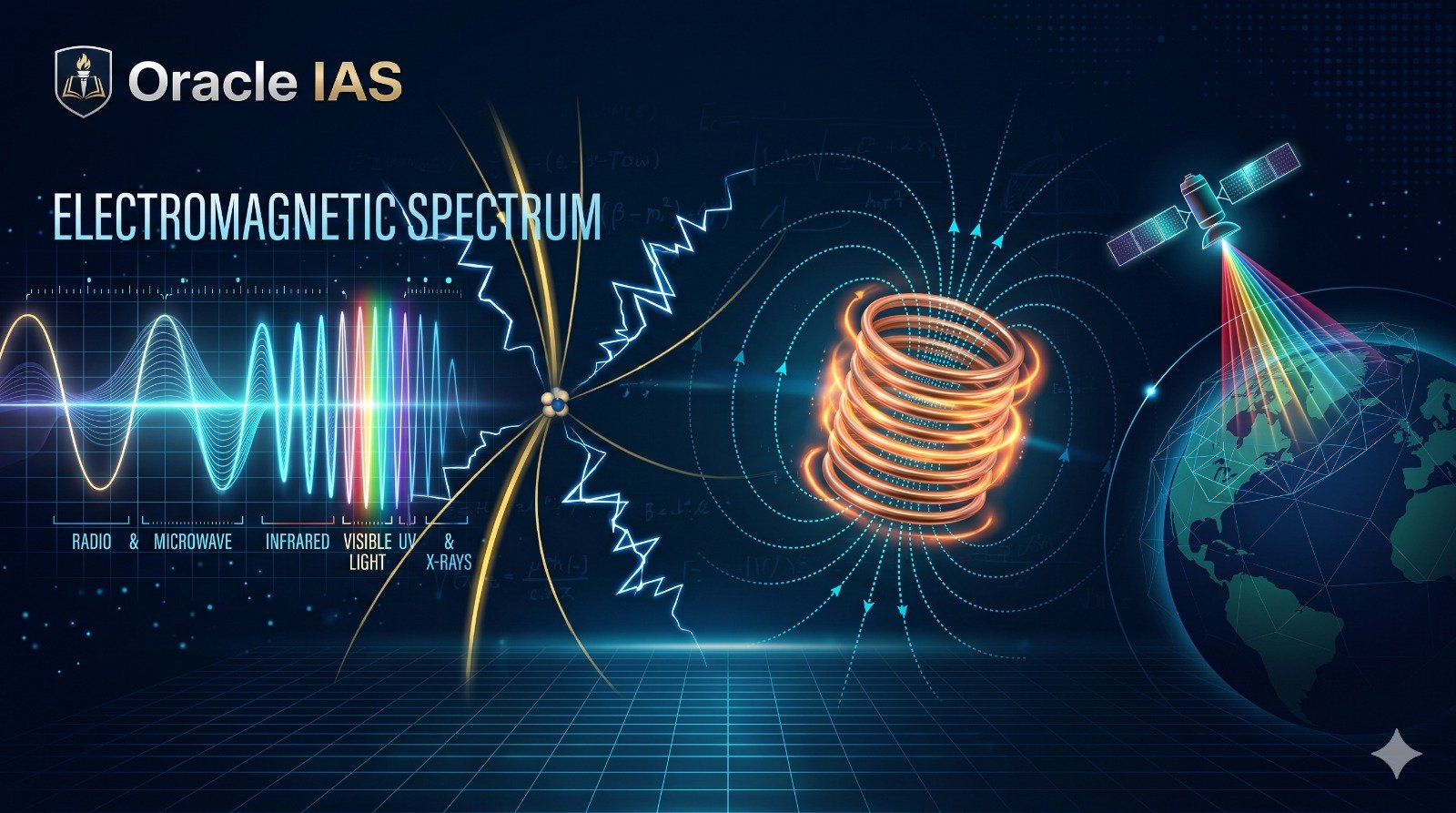
UKPSC Physics Unit 7: Magnetism, Magnetic Dipoles & Electromagnetic Induction 1. High-Yield Micro-Notes Fundamental Laws of Magnetism: Magnetic poles always exist in dipoles (isolated magnetic monopoles do not exist in nature). Like poles repel each other, while unlike poles attract each other. The magnetic force between two magnetic poles follows Coulomb’s Inverse Square Law of

UKPSC Physics: Magnetism, Magnetic Dipoles & Electromagnetic Induction (Solved PYQs & Notes) Read More »

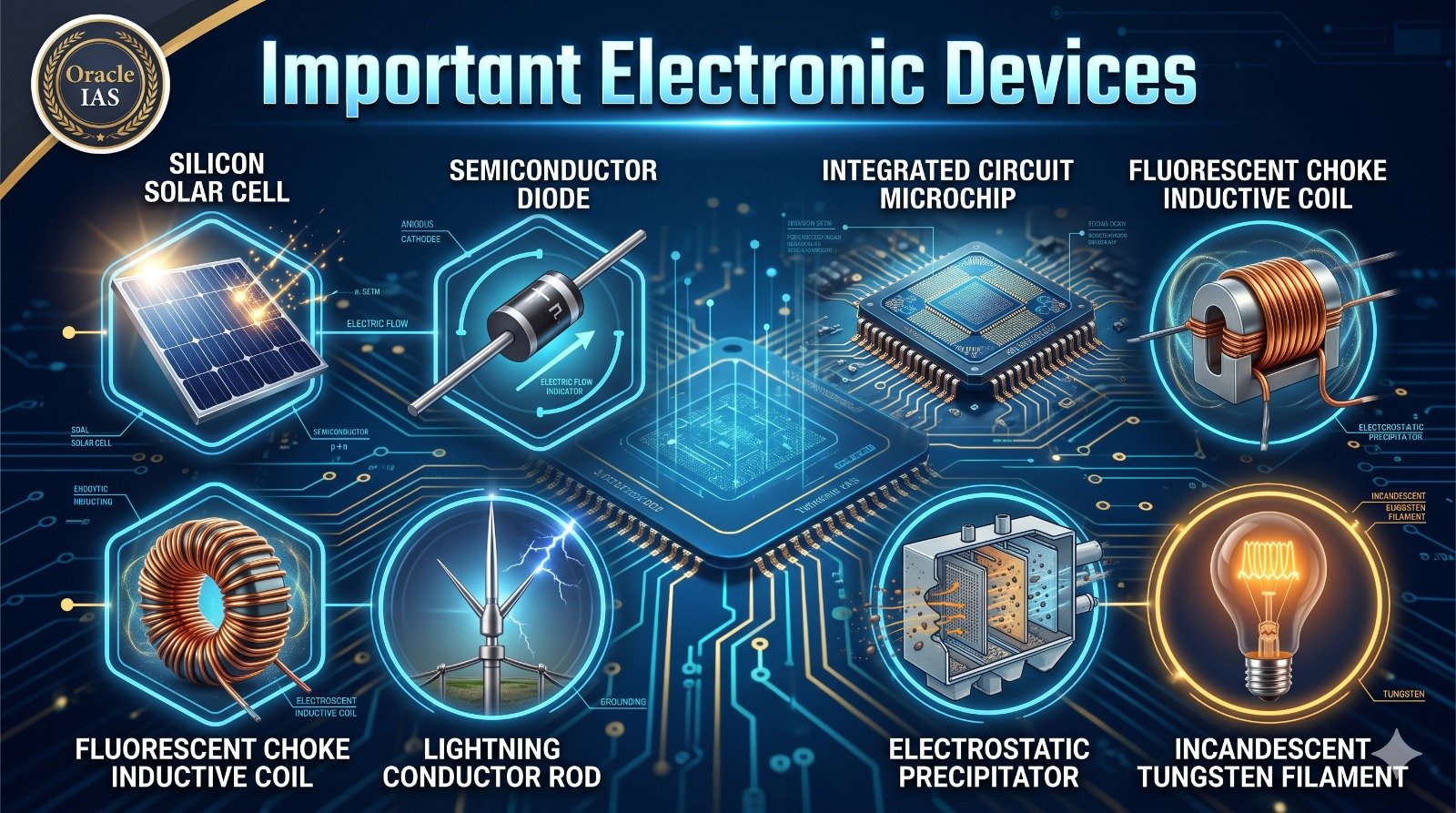
Important Electronic Devices:

UKPSC Physics: Electricity, Magnetism & Electronics (Solved PYQs & Notes)

UKPSC Physics Unit 6: Electricity, Magnetism & Electronics 1. High-Yield Micro-Notes Conductors, Resistance & Heating Elements: Electrical resistance follows the relation R = ρ·L / A, depending directly on conductor length (L), inversely on cross-sectional area (A), and intrinsically on material resistivity (ρ) and temperature. Silver (Ag) possesses the highest electrical conductivity of all metals

UKPSC Physics: Electricity, Magnetism & Electronics (Solved PYQs & Notes) Read More »

Optics, Light, Reflection, Refraction & Human Vision

UKPSC Physics: Optics, Light, Reflection, Refraction & Human Vision (Solved PYQs & Notes)

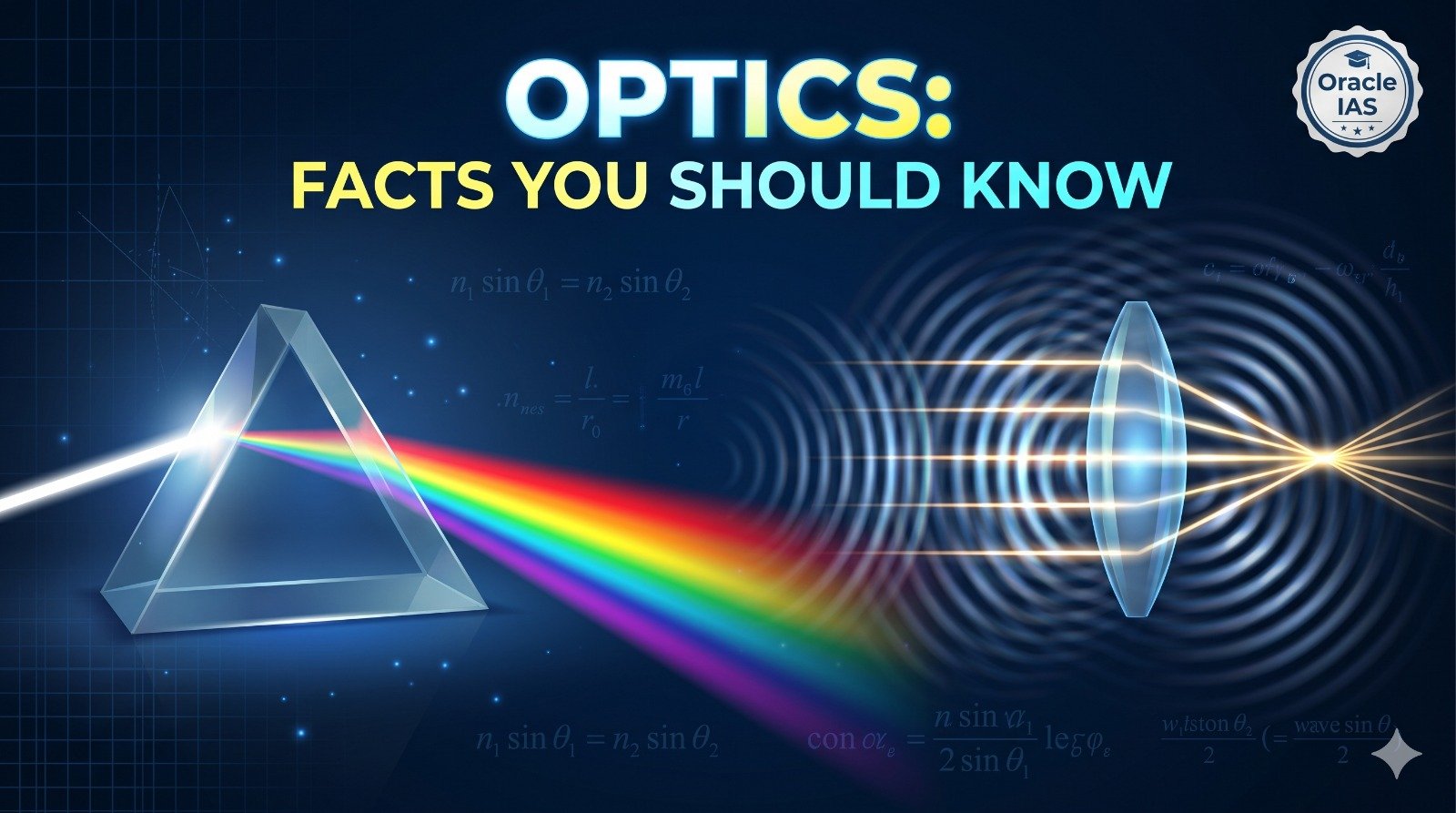
UKPSC Physics Unit 5: Optics, Light, Reflection, Refraction & Human Vision 1. High-Yield Micro-Notes Wave Nature & Interference: In Young’s Double Slit Experiment (YDSE), the fringe separation (fringe width) is given by β = λ·D / d, where λ is wavelength, D is screen distance, and d is slit separation. Reducing slit spacing or increasing

UKPSC Physics: Optics, Light, Reflection, Refraction & Human Vision (Solved PYQs & Notes) Read More »

Heat, Thermodynamics & Thermal Physics

UKPSC Physics: Heat, Thermodynamics & Thermal Physics (Solved PYQs & Notes)

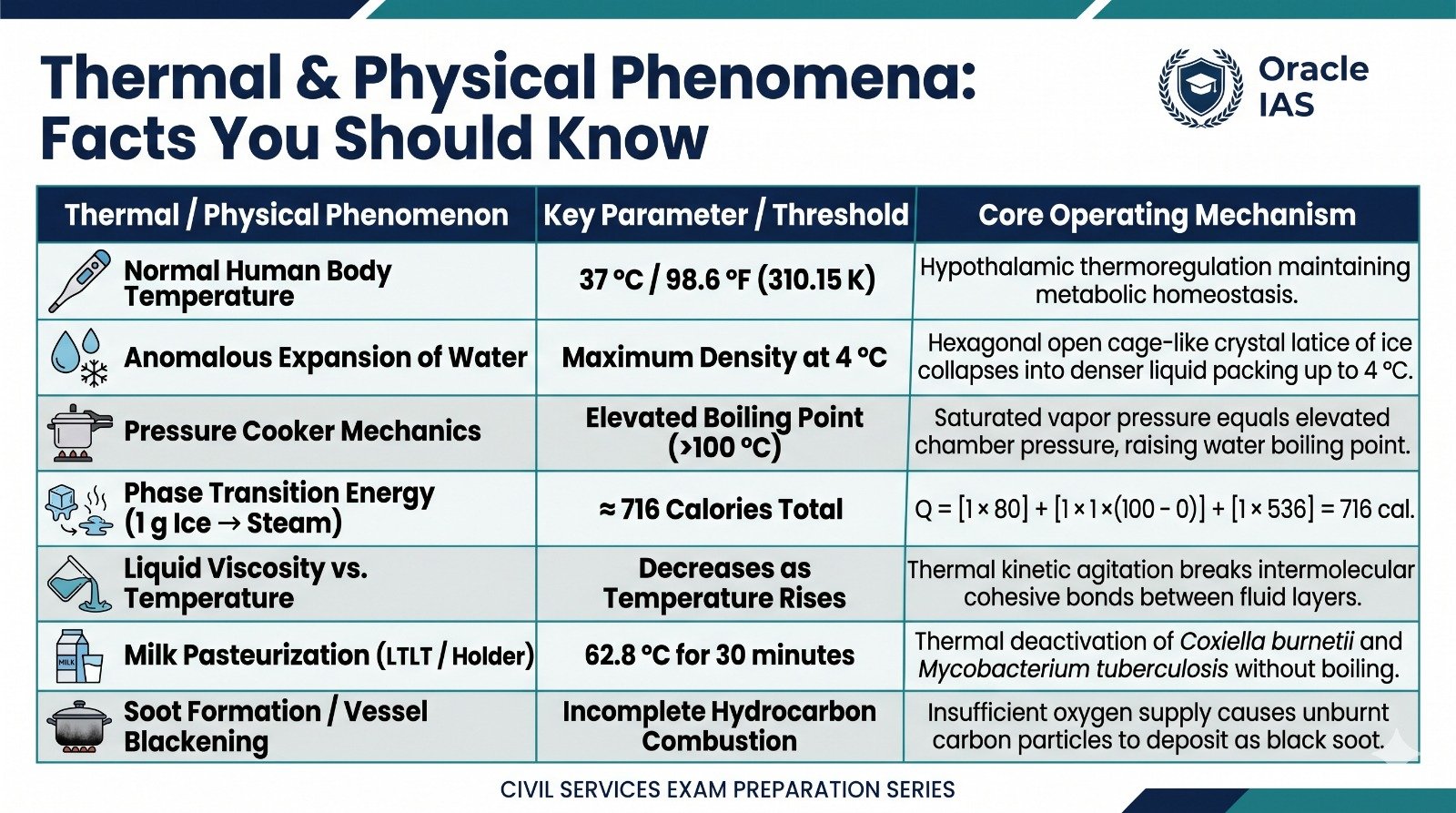
UKPSC Physics Unit 4: Heat, Thermodynamics & Thermal Physics 1. High-Yield Micro-Notes Thermal Properties & Conduction: Thermal conductivity (k) is an intrinsic material property; it depends strictly on the nature and physical composition of the material, not on dimensions like length or cross-sectional area (which determine overall thermal resistance, R = L / (k·A)). Materials

UKPSC Physics: Heat, Thermodynamics & Thermal Physics (Solved PYQs & Notes) Read More »

Wave Classification

UKPSC Physics: Waves, Speed of Sound & Modern Particle Physics (Solved PYQs & Notes)

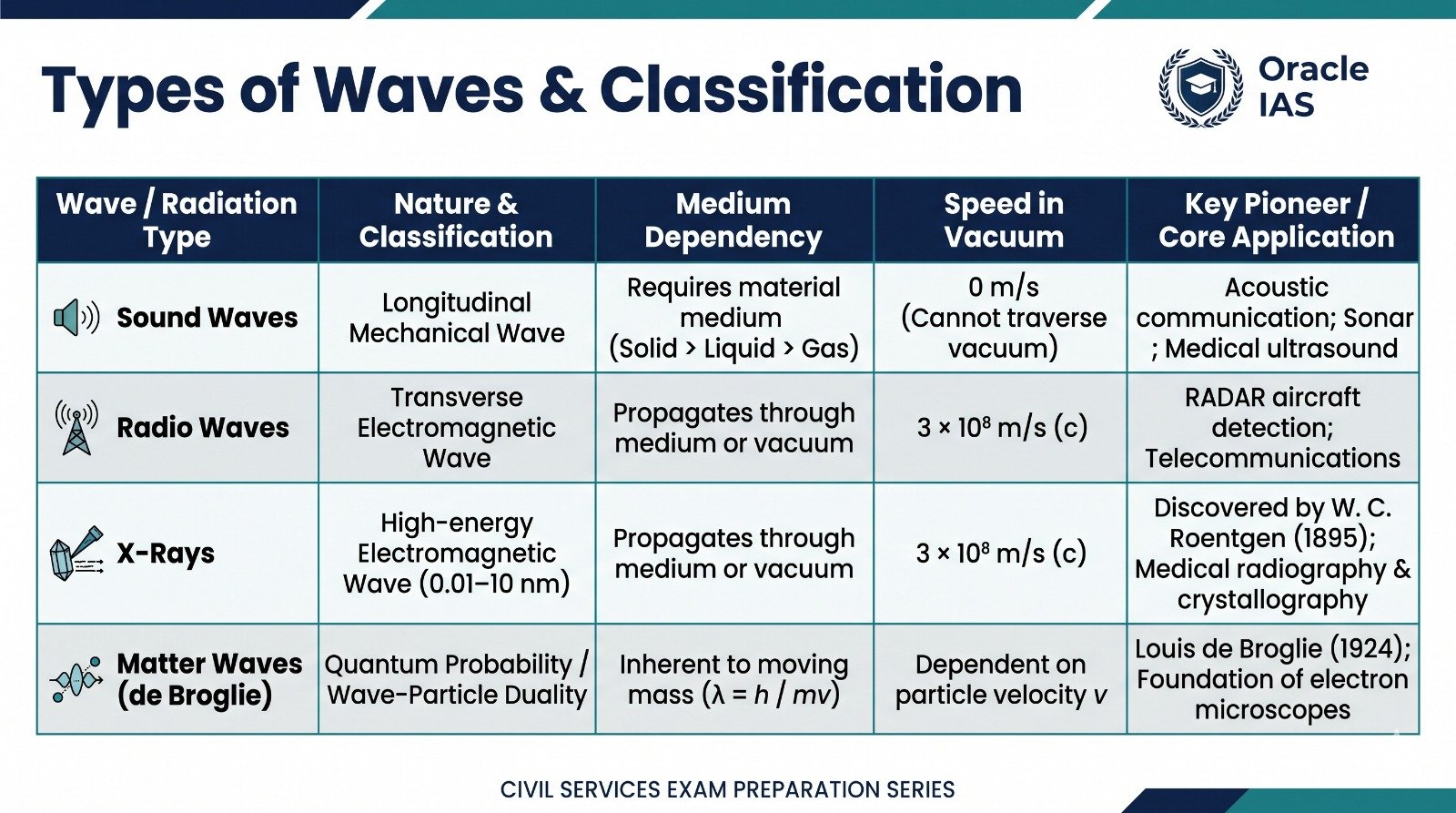
UKPSC Physics Unit 3: Waves, Speed of Sound & Modern Particle Physics 1. High-Yield Micro-Notes Mechanical vs. Electromagnetic Waves: Sound waves are longitudinal mechanical waves that require a material medium (solid, liquid, or gas) to propagate via periodic compressions and rarefactions; they cannot travel through a vacuum. Conversely, radio waves, micro-waves, infrared, visible light, ultraviolet,

UKPSC Physics: Waves, Speed of Sound & Modern Particle Physics (Solved PYQs & Notes) Read More »

Mechanics & Energy Transformations

UKPSC Physics: Mechanics & Energy Transformations (Solved PYQs & Revision Notes)

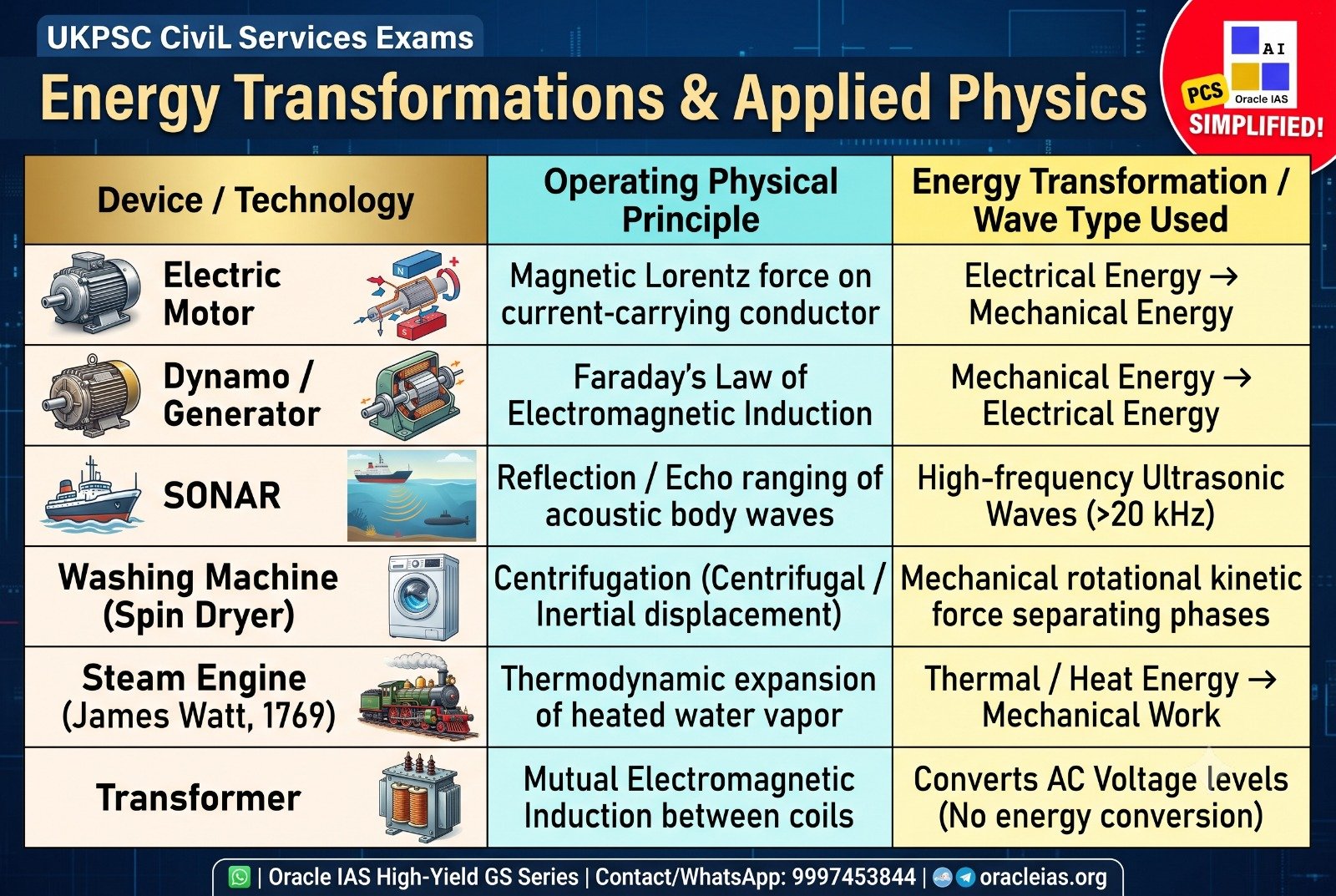
UKPSC Physics Unit 2: Mechanics & Energy Transformations  1. High-Yield Micro-Notes Energy Transducers & Electrical Machines: An Electric Motor converts electrical energy into mechanical energy (kinetic rotation), operating on Fleming’s Left-Hand Rule. Conversely, an Electric Generator (Dynamo) converts mechanical energy into electrical energy via electromagnetic induction (Fleming’s Right-Hand Rule). A Transformer alters alternating voltage/current levels

UKPSC Physics: Mechanics & Energy Transformations (Solved PYQs & Revision Notes) Read More »

Scientific Instrument

UKPSC Physics: Physical Quantities, Units & Measuring Instruments (Solved PYQs & Notes)

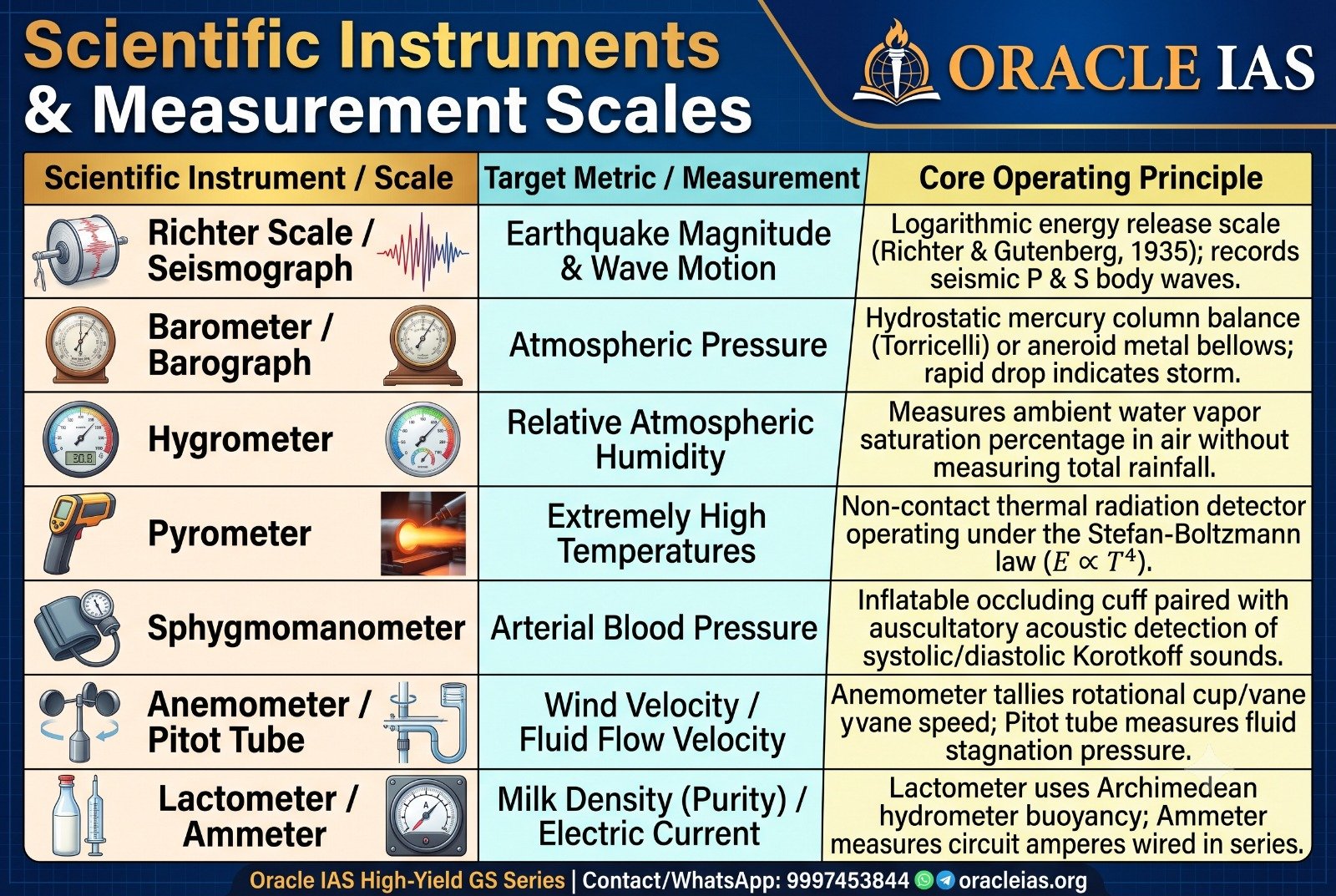
UKPSC Physics Unit 1: Physical Quantities, Units & Measuring Instruments Part of the UKPSC General Science & Technology Revision Series.  1. High-Yield Micro-Notes Astronomical & Maritime Scales: Distance across deep space is gauged in Light Years (distance traversed by light in vacuum in one Julian year ≈ 9.46 × 10¹⁵ m) and Parsec (parallax of

UKPSC Physics: Physical Quantities, Units & Measuring Instruments (Solved PYQs & Notes) Read More »